In my 15 years as a full-stack growth marketing career, I have seen the same pattern across every level of an organization. I have worked as a solo contributor and I have led teams of 30. While many leaders focus on workload, the real killer of talent is not the amount of work. It is the friction of the process.
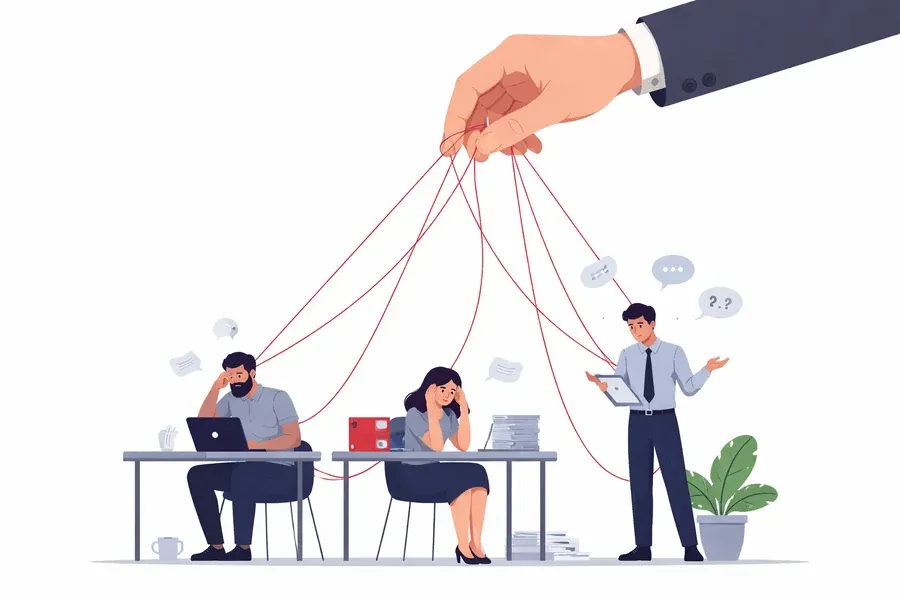
Nothing demotivates a talented team more than the "Approval Trap." When a seasoned professional is forced to justify every strategic decision to cross-functional stakeholders who lack specific context, creativity dies. It transforms a high-impact team into a group of task-takers.
The Science of Professional Stress
Jeff Bezos famously stated that stress does not come from hard work. Instead, it comes from taking no action over something that you can control. This is the primary source of burnout for top-tier talent.
There are times I felt immense stress, not because I lacked the skill to do the job, but because my ideas were trapped in endless approval cycles. When expertise is met with excessive questioning from people outside the function, it creates a state of forced paralysis. Autonomy is not just a perk; it is a psychological necessity for high performers.
Drucker and the Productive Knowledge Worker
Peter Drucker, the father of modern management, argued that the greatest challenge for any organization is making the knowledge worker productive. He taught that "the knowledge worker is the one who knows more about their job than anybody else in the organization."
If you hire experts but then force them to seek permission from non-experts, you are violating Drucker’s core principle. Operational Autonomy solves this by aligning authority with expertise. To be productive, a team must have the right to act on their insights without the delay of handoffs.
| The Friction (The Source of Stress) | The Autonomous Solution (The Respect) |
| The Gatekeeper Model: Decisions are made by those with the most seniority, not the most context. | Expert Authority: Decisions are made by the people closest to the work and the data. |
| The Consensus Trap: Projects stall while waiting for "buy-in" from every department. | Direct Execution: Teams have the tools and trust to move from insight to action in minutes. |
| Micro-Management: Leadership focuses on "How" a task is done rather than the "What." | Outcome Accountability: Leadership defines the "What" and lets the team own the "How." |
Respect as a Leadership Strategy
Giving a team autonomy is the ultimate sign of trust. It is a way of saying, "I value your 15 years of experience more than I value my own need for control." When you empower a team to execute on their judgment, you are providing the highest form of motivation. You move the culture from "seeking permission" to "taking ownership."
The Organizational Takeaway: Scaling Trust
To stop the drain on your organization’s talent, you must shift from management by objectives to execution by outcomes.
- Audit the Bottlenecks: Identify every point where a project stops for a signature. If the person signing doesn't add technical value, remove that step.
- Measure Impact, Not Activity: Stop asking for progress reports on tasks. Start asking about the behavioral changes or results the team has achieved.
By eliminating the six-week approval cycle and replacing it with immediate action, you allow your veterans to do what they do best. This is the only way to maintain startup speed at an enterprise scale.
Get the monthly briefing
One high-signal edition a month on B2B growth, AI search, and agentic marketing. No noise, unsubscribe anytime.