Over the last few weeks, I started noticing something subtle but strange in my inbox.
Emails that I used to receive every single day but rarely opened were suddenly missing. At the same time, a few newsletters I consistently skim and occasionally engage with started appearing right at the top.
At first, I thought it was random.
But it wasn’t.
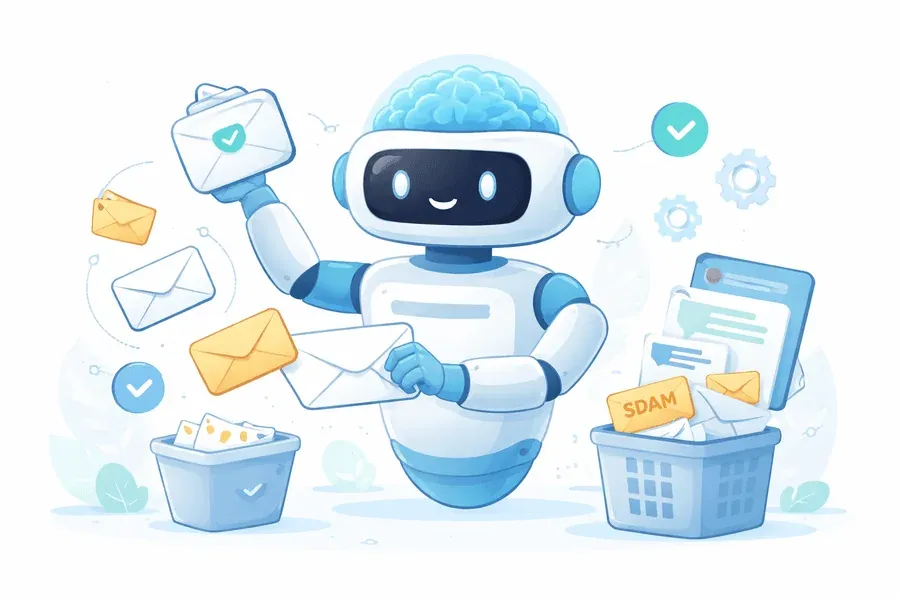
The AI inside these inboxes had quietly learned my behaviour.
It had observed what I open, what I scroll through, what I click, what I delete, and what I ignore. Based on those patterns, it began reshaping my inbox around what it believed actually mattered to me.
That’s when it really hit me.
AI has officially taken over our inboxes.
This shift is bigger than Gmail
Gmail’s AI updates made this change obvious. But this is not just a Google story.
Microsoft has deeply integrated Copilot into Outlook. Apple is rolling out AI capabilities across Mail as part of its broader Apple Intelligence push. Yahoo, Proton, and other providers are quietly embedding similar intelligence into filtering, prioritisation, and summarisation systems.
Across the board, inboxes are transforming from passive message lists into intelligent assistants.
The direction is clear.
Email is becoming AI-curated by default.
Which means the way people consume emails is fundamentally changing.
In many cases, users are no longer reading emails line by line. They are consuming AI-generated summaries, highlights, and action points.
That alone should make every email marketer pause.
The inbox is no longer neutral
For years, we treated inboxes like passive containers.
Whoever sent first appeared first. Whoever wrote better subject lines got opened. Whoever designed prettier emails got more clicks.
That mental model no longer holds.
Modern inboxes behave more like executive assistants. They continuously learn from behaviour and reorder messages based on predicted relevance, not arrival time.
Instead of showing everything, they now show what they believe deserves attention.
This means email marketers are no longer competing only with other brands.
We are competing with an AI system that decides whether we deserve to appear at all.
What Gmail, Outlook, and Apple Mail are really doing
Let’s look at what is happening under the hood.
Gmail is using AI to prioritise messages, generate summaries, surface important content, and help users take action faster.
Microsoft Outlook, powered by Copilot, is going even further. It summarises long email threads, identifies action items, ranks messages by urgency, and even drafts responses based on context.
Apple Mail is now integrating Apple Intelligence to summarise messages, highlight important information, and help users navigate crowded inboxes more efficiently.
In simple terms, all of them are trying to answer one question for the user:
What actually deserves my attention right now?
And that is the question our email marketing must now satisfy.
The uncomfortable truth for marketers
For years, we focused on controlling the email experience.
We obsessed over subject lines, preview text, layouts, images, formatting, and send-time optimisation.
We believed that if we perfected these levers, we could engineer attention.
Now, AI sits between us and the reader.
It reads our emails first.
It summarises them.
It ranks them.
It filters them.
Sometimes, it quietly removes them from visibility altogether.
This means we no longer fully control how our message is presented.
We only influence whether it deserves to be shown.
And that is a very different game.
Inbox presence must now be earned
One of the biggest mindset shifts I have personally gone through is how I define success in email marketing.
Earlier, I cared deeply about open rates.
Now, I care far more about what happens after the open.
Did the reader scroll?
Did they click?
Did they spend time on the site?
Did they explore further?
Did they return later?
These actions send powerful signals to inbox algorithms. Over time, those signals directly shape inbox placement.
If users consistently engage with your emails, the AI learns that you add value. If they ignore you, delete you, or skim and bounce, the AI gradually pushes you down.
This creates a compounding effect.
High engagement leads to better visibility, which leads to even higher engagement.
Low engagement slowly pushes you into invisibility.
This is how bad email marketing dies. Quietly.
Why traditional personalization is no longer enough
Let’s be honest.
“Hey {{FirstName}}” stopped being meaningful a long time ago.
Today, it is not just ineffective. It is irrelevant.
AI inboxes understand behaviour far better than we ever could. They track browsing habits, content interests, interaction patterns, device usage, timing signals, and response loops.
That means personalization must now answer one simple question.
Why should this person care about this message right now?
Not what is their name.
Not what company they work at.
Not which segment they belong to.
But what are they trying to solve in this moment?
This shift from identity-based personalization to intent-based personalization is one of the most important changes happening in modern email marketing.
Writing for AI summaries changed how I write emails
One subtle shift has completely reshaped how I approach email copy.
AI now frequently summarises emails before users even read them.
Which means your carefully crafted message may get compressed into one or two lines.
Before I hit send, I now ask myself:
If an AI had to summarise this email in one sentence, would it still sound useful?
If the answer is no, the email needs rewriting.
This is why vague intros, fluffy storytelling, and image-heavy layouts are becoming liabilities.
Clarity now beats creativity.
Utility beats cleverness.
AI summaries are a massive productivity upgrade
There is another side to this shift that I genuinely love.
Email summaries.
Long threads now get distilled into short, clear context. Multi-reply conversations turn into simple action points. Important updates surface instantly without me having to dig.
The net effect is simple.
Less time managing email.
More time thinking, creating, and doing meaningful work.
For me personally, this has been a huge productivity upgrade.
AI is slowly stepping into the role of an executive assistant, helping protect attention, reduce cognitive overload, and allow deeper focus on what actually matters.
And that is a shift I truly welcome.
The psychology of attention in AI-filtered inboxes
When AI filters out most inbox noise, what remains gets far more attention.
But that attention comes with higher expectations.
Readers now demand relevance, clarity, and usefulness almost instantly. There is very little tolerance for vague messaging or generic promotions.
This is why structured persuasion frameworks have quietly become even more powerful.
Clear problem articulation.
Strong value propositions.
Concrete outcomes.
Direct calls to action.
When attention is scarce, structure creates momentum.
How my metrics focus has changed
Open rates used to excite me.
Now, I barely look at them.
What I care far more about today is engagement depth and behavioural signals.
Click quality.
Time on page.
Scroll depth.
Return visits.
Conversion velocity.
Because in AI inboxes, engagement is no longer just a performance metric.
It is a ranking factor.
We are entering the age of inbox engineering
We are no longer just writing emails.
We are training algorithms.
Every campaign teaches the inbox how to treat us.
Helpful or noisy.
Relevant or generic.
Valuable or disposable.
This is why I believe we are moving from email marketing into something deeper.
Inbox engineering.
Designing systems, content, and engagement loops that consistently earn algorithmic trust.
Final thought
AI is not killing email marketing.
It is killing lazy email marketing.
It is killing irrelevant broadcasts.
It is killing generic newsletters.
It is killing shallow personalization.
It is killing low-value content.
And honestly, that is a good thing.
Because the marketers who adapt will build stronger relationships, deeper engagement, and far more sustainable revenue through email.
The inbox is becoming smarter.
Now our marketing has to become smarter too.
Get the monthly briefing
One high-signal edition a month on B2B growth, AI search, and agentic marketing. No noise, unsubscribe anytime.