We're watching something fundamental break in real time.
For two decades, digital marketing operated on a simple premise: people search, you rank, they click, you convert. The entire industry (SEO, PPC, content marketing, conversion optimization) was built on that linear path.
That path just forked.
We've moved from a world of "search and click" to one of "synthesis and curation." If you're still optimizing for the old path, you're optimizing for a shrinking slice of the pie.
Recent data shows 37% now start searches with AI tools like ChatGPT instead of Google. About 60% of searches end without a click-through, with users getting answers directly on results pages.
Let me show you what's actually happening in the data, and why it matters more than any algorithm update you've ever scrambled to adapt to.
The Law of Least Effort Is Reshaping Search Behavior
Here's the thing about human behavior: we always find the path of least resistance.
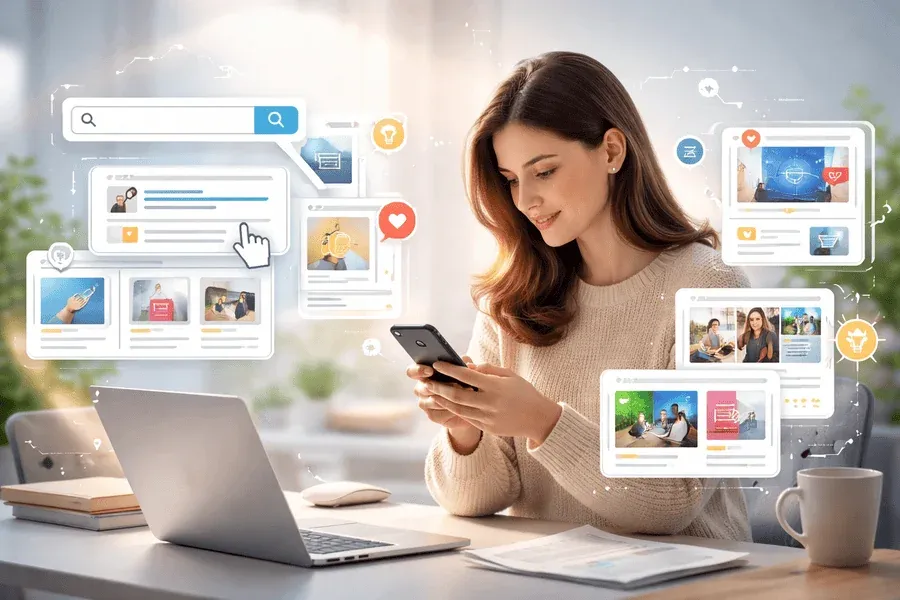
Traditional search made us work. Query, scan ten blue links, click, read, back button, click again, compare, synthesize. That's research, not retrieval. People are tired of it.
The numbers from the 2026 AI and Search Behavior Study by Eight Oh Two tell the story:
- 40% are frustrated by clicking through too many links
- 37% are drowning in ads and sponsored results
- 37% of consumers now start searches with AI tools like ChatGPT instead of Google
That last stat isn't a trend. It's a tipping point.
People stopped searching and started asking. They stopped assembling answers and started receiving them. The cognitive load dropped, and there's no going back from that.
This is what I've been calling the shift from search to synthesis. AI doesn't give you options. It gives you the answer, already processed, already filtered, already decided.
Zero-Click Search Is the New Normal
Here's where it gets uncomfortable for anyone tracking traffic metrics.
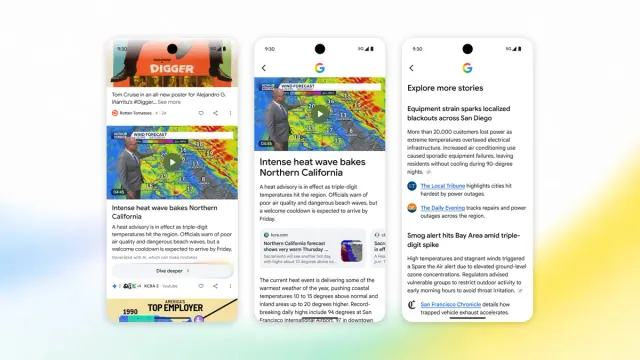
About 60% of searches now end without a click-through. Read that again. Six out of ten searches get answered directly on the results page. The user got what they needed. They never visited your site. Your content was consumed, but you never saw the visitor.
This creates what some call the "AI Dark Funnel." It's an untracked decision space where consumers form opinions, narrow choices, and make decisions based on AI summaries before they ever land on your website.
Your analytics look fine. Your rankings look stable. But something feels off. Traffic growth slowed. Conversions per session haven't improved. You can't quite put your finger on it.
This is what you're feeling. Discovery moved upstream from your site, and the traditional metrics aren't capturing it.
In this new reality, success isn't measured by traffic volume. It's measured by what I call "citation share." How often does your brand show up as the trusted source inside AI-generated answers?
If AI isn't citing you, you don't exist where decisions happen.
The Trust Paradox: Confident but Cautious
Here's what makes this shift so interesting. People trust AI, but they're not naive about it.
From The 2026 AI and Search Behavior Study by Eight Oh Two, The data shows both sides:
- 60% say AI delivers better, clearer answers than traditional search
- 80% believe AI provides unbiased information
- But 85% still double-check AI answers against other sources
This isn't distrust. It's pragmatism.
What's emerging is a hybrid buyer journey. AI handles the first pass (the understanding, the synthesis, the initial trust formation). Then traditional search handles verification (the fact-checking, the price comparison, the review scanning).
AI gives speed and clarity. Search gives confidence and confirmation.
They're not competing anymore. They're sequential.
I talked about this pattern in my piece on why AI in marketing isn't optional anymore. Traditional search isn't dead. It just got demoted. It moved from the discovery phase to the confirmation phase. From first touch to final check.
For marketers, this means you need consistency across both. If your story changes between what AI says about you and what users find when they verify, credibility breaks. The hybrid journey becomes a broken journey.
This is where E-E-A-T (Experience, Expertise, Authoritativeness, Trustworthiness) stops being an SEO checklist and becomes your survival mechanism. You need to be the trusted source that both AI cites and humans confirm.
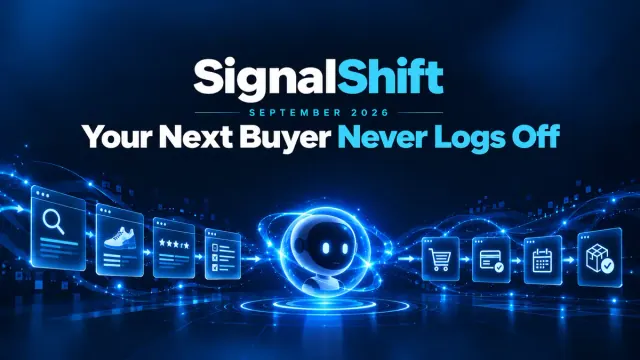
Agentic Commerce: When Bots Become Your Customers
Now let's talk about where this goes next, because it's already starting.
Nearly 24% of consumers are comfortable with AI agents shopping for them, rising to 32% among Gen Z. About one in three prefer automated channels like AI agents over human interaction. Think about what that means.
Your customer isn't a person browsing your beautiful product page. Your customer is an AI agent parsing your structured data, comparing price points, and making a decision in milliseconds based on efficiency, not emotion.
AI agents don't "shop" the way humans do. They don't get charmed by clever copy or stunning visuals. They decide based on structured data, clear specifications, and optimized signals.
If your product catalog isn't machine-readable, you're invisible to the thing doing the buying.
This is the shift from storefronts to what I'm calling "agent-ready" commerce. Your competitive advantage isn't your checkout flow anymore. It's whether your data is properly exposed via APIs, whether you're using schema markup correctly, whether you're "chunkable" and "quotable" for autonomous systems.
The battleground moved from "can humans find us" to "can agents understand us."
The Return to Direct Relationships
Here's the counterintuitive part. As AI intermediates more of the discovery process, the most successful brands are actually moving backward. Back to strategies from the first decade of the web.
They're building direct relationships.
Publishers and marketers who saw referral traffic as their lifeline are now calling this moment a "traffic apocalypse." Sounds dramatic, but the sentiment is real. When 60% of searches don't click through, you can't rely on being found. You need to be followed.
That means:
- Newsletters that people actually want to read
- Podcasts that build trust over time
- Mobile apps that create habit
- Communities that foster belonging
These aren't new tactics. They're old tactics that work again because the landscape changed.
This is owned-and-operated media. First-party relationships. Direct access that insulates you from algorithm changes, platform shifts, and AI intermediation.
The value exchange is simple: give people something worth subscribing to, and they'll give you permission to reach them directly.
When discovery happens in AI, but loyalty happens in inboxes, you need both strategies running in parallel.
The Library Became a Concierge
Here's how I think about this shift.
Traditional search was like a library. You walked in with a question, got a map to the right section, and found the books yourself. Digital marketing was about having the brightest cover on the shelf, the best position, the most eye-catching title.
The AI-driven future is like a concierge. You walk in with a question, and the concierge has already read all the books. They give you the summary, the key points, the recommendation. You never touch the shelf.
In this new world, marketing isn't about having the brightest cover. It's about making sure the concierge trusts your book enough to quote it.
That's the fundamental shift.
From visibility to citability. From clicks to citations. From traffic to trust signals.
What This Actually Means for Your Strategy
I've written about the frameworks that address this shift. My GEO framework for ranking on LLMs shows how to optimize for AI citations. My piece on long-form intent queries killing keywords explains how search behavior evolved to conversational queries. And my complete guide to AI search optimization walks through the tactical execution that drives a 4.4x conversion lift.
This isn't another framework. This is the context that makes all those frameworks necessary.
Consumer behavior changed. The metrics that mattered changed. The definition of visibility changed.
You can't just optimize for Google anymore and call it a search strategy. You need to optimize for:
- How AI interprets and cites your brand (synthesis phase)
- How humans verify what AI told them (confirmation phase)
- How agents parse and act on your data (agentic commerce)
- How you build direct relationships (owned media)
These aren't separate strategies. They're one integrated approach to a fragmented discovery landscape.
The brands winning right now aren't the ones with the most traffic. They're the ones who show up consistently across all four of these touchpoints.
The Bottom Line
When 37% of people start with AI and 60% of searches end without a click, the old playbook doesn't just need updates. It needs a rewrite.
SEO still matters. But SEO alone is survival mode, not growth mode.
The real question isn't how well you rank anymore. It's how well AI understands you, how consistently humans verify you, how easily agents transact with you, and how directly you can reach people who matter.
That's not search optimization. That's synthesis optimization.
And if you're not optimizing for synthesis, you're optimizing for a world that's already shrinking.
TL;DR
Digital marketing shifted from "search and click" to "synthesis and curation." 37% now start with AI instead of Google, and 60% of searches end without clicks because AI answers directly. This created the "AI Dark Funnel" where decisions happen before anyone visits your site. People trust AI (60% say it's better than search) but verify elsewhere (85% double-check). Traditional search moved from discovery to confirmation. Success now depends on "citation share" (how often AI quotes you) not just traffic. Nearly 24% are comfortable with AI agents shopping, meaning machine-readable data matters more than pretty websites. Brands are pivoting to direct relationships (newsletters, podcasts, apps) to survive traffic loss. The game changed from having the brightest cover to being the book the concierge trusts enough to quote.
FAQs
What does "synthesis and curation" mean in practice?
Instead of users searching and clicking through multiple sources to piece together an answer, AI synthesizes information from multiple sources and curates a single response. Users get understanding immediately rather than doing the assembly work themselves.
If 60% of searches don't click through, how do I measure success?
Track citation share (how often you're referenced in AI responses), brand mention volume in AI tools, and quality of traffic (conversion rates) over quantity. Also measure owned media growth like newsletter subscribers, app users, and community members. These direct relationships matter more now.
What's the difference between GEO and AEO?
GEO (Generative Engine Optimization) is about optimizing for how AI models cite and reference your content. AEO (Answer Engine Optimization) is broader. It covers optimizing for any system that delivers direct answers, including featured snippets, voice assistants, and AI chatbots. There's overlap, but GEO is specifically about generative AI models.
Should I stop investing in traditional SEO?
No. Traditional SEO still matters for the verification phase of the hybrid journey and for high-intent, transactional queries. But it's not sufficient alone. You need parallel strategies for AI visibility, agent-ready data, and direct audience relationships.
What does "agent-ready" actually look like?
It means your product data is accessible via APIs, properly structured with schema markup, includes clear specifications and pricing, and can be easily parsed by AI systems making automated decisions. Think machine-readable first, human-readable second.
How do I build citation share if I can't control what AI says about me?
Make your brand easy to understand and cite. Use clear positioning, authoritative content with proper attribution, structured data markup, consistent messaging across all sources, and build genuine E-E-A-T signals. The clearer and more trustworthy your digital footprint, the more likely AI is to reference you accurately.
Get the monthly briefing
One high-signal edition a month on B2B growth, AI search, and agentic marketing. No noise, unsubscribe anytime.