When I started blogging in 2008, SEO was simple. Keywords controlled everything. If you placed the right phrase in the title, repeated it a few times in the content, secured enough backlinks, and kept the page clean, you would rank. In my 2011 SEO analyst role, this formula still worked.
SEO then evolved into semantic search, focusing on understanding intent and delivering the most reliable results. But search engines were still fundamentally driven by keywords. You could never give them a paragraph of context and ask for a solution.
Search today looks nothing like that world. The AI-first discovery shift is accelerating. We are all seeing it, and we are all personally turning to AI tools for our queries, and the research data backs it up.
"According to Gartner, by 2026, 80% of B2B search queries will occur outside traditional search platforms."
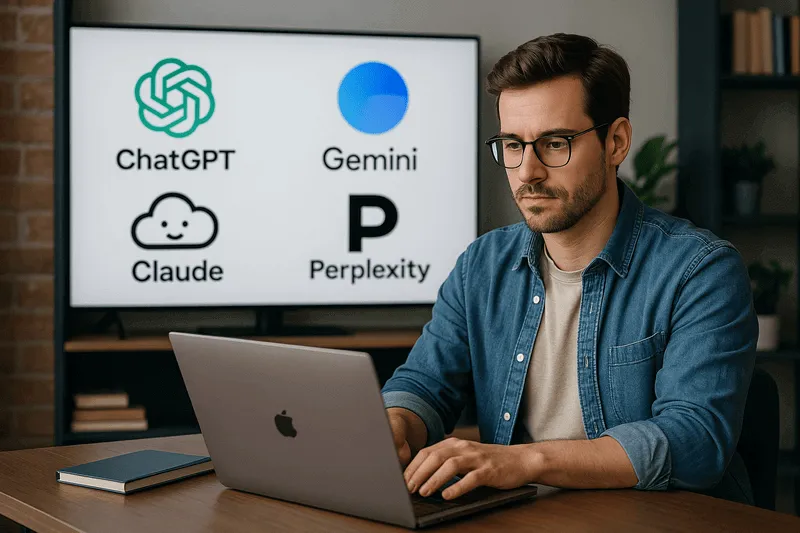
"According to onelittleweb’s analysis of Semrush data (April 2023–March 2025), by mid-2024, global traffic to AI chatbots like ChatGPT, Gemini, Claude, and Perplexity reached nearly 3% of total web search activity, with growth rates exceeding 80% year-over-year. While traditional search engines still dominate, AI-first discovery is accelerating rapidly and changing how people seek answers, recommendations, and shortlists.
Winning visibility now means ranking in both traditional search engines and LLM-driven generative engines. You need to manage both SEO and AISO in the age of AI to harness the twin engines of digital visibility.
A recent study by Semrush found that optimizing for AI search can boost your website conversions by up to 4.4x, highlighting the clear benefits of integrating AI-focused strategies into your growth plan.
After applying my recent updates across a few websites, reflecting on my learnings, and doing several days of focused research, I put this together. This GEO playbook distills real-world experience, technical fundamentals, and nearly fifteen years of pattern recognition into a framework built for marketing leaders stepping into the AI era.
Part 1: Build the Technical Foundation
Enable AI Bot Access
Add AI crawler permissions to your robots.txt file:
User-agent: OAI-SearchBot
Allow: /

User-agent: ClaudeBot
Allow: /

User-agent: anthropic-ai
Allow: /

User-agent: PerplexityBot
Allow: /

User-agent: Google-Extended
Allow: /

User-agent: Bingbot
Allow: /

User-agent: GPTBot
Allow: /
Monitor this list as new AI models and crawlers deploy.
Implement LLMs.txt for AI Crawler Governance
AI companies are beginning to honor a new protocol called llms.txt, which sits at the root of your domain the same way robots.txt does. This file tells LLMs how they’re allowed to use, reference, or train on your content.
If you’re using WordPress, plugins like Yoast SEO now auto-generate and manage the llms.txt file for you, which removes the need for manual setup. Other SEO plugins are also adding support as this protocol becomes standard.
Creating this file is simple, but it provides a clear signal to AI crawlers and reduces ambiguity about how your content should be treated.
What you can define in llms.txt
- Which AI companies or crawlers are allowed
- Which directories or sections are off-limits
- Whether you want attribution or citations
- The URLs that represent your brand (home, about, products, services, etc.)
- Where your sitemap lives (important for LLM discovery)
Sample llms.txt
Place this file at:https://yourdomain.com/llms.txt
# LLMs.txt: AI Crawler and Content Usage Preferences

# Allow major AI crawlers
ai-openai: allow
ai-google: allow
ai-anthropic: allow
ai-meta: allow
ai-perplexity: allow

# Disallow internal or sensitive directories
disallow: /internal/
disallow: /private/
disallow: /admin/

# Request citations when content is used
require-citation: true

# Important brand pages
homepage: https://yourdomain.com/
about: https://yourdomain.com/about/
contact: https://yourdomain.com/contact/
products: https://yourdomain.com/products/
services: https://yourdomain.com/services/
blog: https://yourdomain.com/blog/

# Sitemap location for structured crawling
sitemap: https://yourdomain.com/sitemap.xml
Why marketers should adopt this early
- Establishes clear rules for AI training and referencing
- Enhances brand transparency for both humans and LLMs
- Improves structured discovery of your main pages
- Reduces misinterpretation of sensitive or internal content
- Aligns your governance with emerging AI content standards
This will likely become a default requirement as more AI models begin respecting site-level permissions.
Fix Core Indexing Issues
Audit and resolve:
- Page speed using Google PageSpeed Insights
- Content visibility in page source, not just through JavaScript
- Unblocked CSS and JavaScript files in robots.txt
- Correct canonical URLs
- Crawlable content in HTML body
Implement IndexNow
Set up IndexNow to instantly notify search engines of content updates:
- Generate an API key at IndexNow.org
- Add the code snippet to your CMS
- Configure automatic notifications
Manage Crawl Budget
- Block thin AI-generated pages from indexing
- Consolidate duplicate category pages
- Set quality gates requiring minimum word count and unique value
- Use robots.txt or noindex tags strategically
Build Topic Clusters
- Identify core pillar topics
- Create comprehensive guides for each pillar
- Write supporting articles for specific subtopics
- Link supporting articles to pillar pages
- Link pillar pages to relevant supporting content
Part 2: Structure Content for AI Extraction
Lead with Summaries
Place a TLDR or executive summary in the first 150 words. Answer the core question immediately using clear, direct language.
Use Extraction-Friendly Formats
Structure content with:
- Numbered step-by-step instructions
- Comparison tables with clear headers
- Bullet points for features and takeaways
- FAQ sections with question-and-answer pairs
- Feature versus benefit charts
Implement Schema Markup
Add structured data based on your content type:
- Product Schema for product pages with pricing, features, reviews
- Service Schema for service offerings
- Article Schema for blog posts and guides
- FAQ Schema for question-and-answer content
- HowTo Schema for instructional content
- Review Schema for product or service reviews
- Comparison Schema for versus pages
Write for Conversational Search
- Mine Reddit, Quora, and customer support tickets for real questions
- Check Google's "People Also Ask" boxes
- Use question-based headers
- Write complete sentences that directly answer questions
Optimize for Buying Intent
- Publish transparent pricing tables and breakdowns
- Build detailed comparison pages with Comparison Schema
- Add case studies, testimonials, customer logos, ROI calculators, demo videos
- Address objections and competitive alternatives directly
Build Informational Content Depth
- Create comprehensive pillar page guides for core topics
- Write supporting articles that deepen coverage
- Publish glossary pages for niche industry terms
- Secure industry listings, PR coverage, podcast interviews, expert citations
Part 3: Build Credibility Through E-E-A-T
Implement Quality Controls
- Require expert editors to review all AI-assisted content
- Include specific examples, stories, firsthand insights
- Remove generic AI-generated phrases
- Let brand voice and expert perspective show through
Fact-Check Everything
- Require source links for every statistic and data point
- Use primary sources
- Add publication dates
- Create a fact-checking workflow
Use Author and ReviewedBy Schema
- Add Author Schema with name, credentials, bio
- Include ReviewedBy Schema for expert-reviewed content
- Link to author profile pages with credentials
- Show publication and last-updated dates
Keep Content Fresh
- Review pillar content quarterly
- Monitor SERP changes for target keywords
- Update statistics, examples, screenshots
- Add sections addressing emerging questions
- Change publication date for substantial updates
Part 4: Optimize Review Platforms and Community Sites
The Review Platform Reality
Research found that 100% of tools recommended by ChatGPT had reviews on Capterra, 99% had reviews on G2, and 78.8% had Wikipedia pages, indicating these platforms serve as basic inclusion signals for tool legitimacy and recognition by large language models (LLMs) like ChatGPT.
Between one-third and three-quarters of review-site citations across major LLMs come from G2, reinforcing its prominence in review citations.
Build Your Review Platform Presence
Major platforms to prioritize:
G2 and Capterra dominate AI citations, but build presence across relevant platforms:
For B2B Software:
- G2 (largest citation share across LLMs)
- Capterra (100% of ChatGPT recommendations had reviews here)
- TrustRadius (enterprise-focused, detailed reviews)
- Gartner Peer Insights (enterprise buyer authority)
- Software Advice (strong SMB reach)
- GetApp (category-specific discoverability)
For Consumer Products:
- Trustpilot (consumer brand visibility)
- Product Hunt (tech-savvy early adopters)
- Amazon (retail product reviews)
- Yelp (local business reviews)
Platform-specific optimization:
Complete comprehensive profiles:
- Add product overview with relevant keywords
- List all features with detailed descriptions
- Publish transparent pricing information
- Include integration details
- Add screenshots and demo videos
- Create customer success stories for different use cases
Generate quality reviews:
- Aim for 10-15 reviews minimum per platform
- Focus on review quality over volume (a 10% increase in reviews correlates with only 2% increase in citations)
- Request reviews from customers with genuine, detailed experience
- Encourage specific examples and use case details
- Maintain consistent review velocity
Build Authority on Your Own Website
Publish comprehensive proof assets:
Your website needs its own credibility layer independent of third-party platforms:
- Detailed case studies with measurable outcomes and specific customer stories
- Video testimonials from recognizable customers
- Customer logos organized by industry, company size, use case
- ROI calculators with transparent methodology
- Implementation guides showing real deployment examples
- Before-and-after comparisons with data
- Independent research reports or commissioned studies
- Third-party audit results or certifications
- Awards and recognition with verifiable sources
Add Review Schema to testimonials and case studies on your site so LLMs can identify and extract this proof content directly.
Build a Wikipedia Presence
78.8% of tools cited by ChatGPT had Wikipedia pages. If you meet Wikipedia's notability guidelines:
- Gather independent, reliable sources mentioning your company
- Create or update your page with neutral, well-referenced content
- Maintain factual accuracy and objectivity
- Keep information current
Optimize for Reddit
Reddit ranks as the top cited source across major LLMs, with over 6,300 citations captured in research.
- Share insights, frameworks, genuine expertise without pitching
- Provide detailed, helpful responses in your domain
- Build reputation through regular, quality contributions
- Link to resources only when they meaningfully support the conversation
Expand to YouTube and Other Platforms
LLMs now frequently summarize and link to YouTube content.
YouTube:
- Create explainer and demo videos
- Use structured metadata with clear titles and descriptions
- Add timestamps and chapter markers
- Include transcripts
Quora:
- Answer questions in your domain with detailed responses
- Link to relevant resources when appropriate
Industry platforms:
- Secure listings on relevant industry directories
- Contribute to niche forums where your audience congregates
- Pursue PR coverage and interviews
Manage Information Consistency
- Audit pricing across all platforms quarterly
- Standardize feature descriptions
- Keep company information synchronized
- Update all profiles when major changes occur
- Use consistent terminology and positioning
Part 5: Ongoing Optimization with AI Visibility Tracking Intent Tools
Marketing leaders must go beyond content “set and forget” by actively monitoring and optimizing both buying and informational intent.
Map the top 15–20 industry-relevant clusters cited by LLMs and prioritize structured, comprehensive content for each. Use AI visibility tracking tools such as Semrush AIO, LLMrefs, SE Rankings, etc. to track where your brand is being referenced and find new opportunities.
These AI visibility tracking tools tracks brand, product, and category mentions across ChatGPT, Gemini, and Perplexity.
These tools surfaces:
- Brand and product mentions in AI-generated answers
- Long-form, high-intent questions users ask about your offerings
- Whether your company appears for intent-rich prompts
- Source pages and platforms AI models reference in your sector
- Sentiment analysis showing positive, neutral, or negative presence
- Actionable recommendations for optimizing LLM visibility
Workflow integration:
- Run monthly LLM visibility audits across all major platforms
- Analyze which queries return your content versus competitors
- Identify content gaps where high-intent questions lack strong answers
- Track sentiment trends to catch potential reputation issues early
- Use insights to prioritize content updates and new content creation
Test LLM Visibility Regularly
Test prompts monthly across ChatGPT, Claude, Gemini, and Perplexity:
- Query your brand name and variations
- Search for category terms like "best [tool type] for [use case]"
- Look for competitor comparisons
- Track "how to" queries in your domain
Document:
- How often your content appears
- Whether information is accurate
- Where you appear in comparison lists
- What sources LLMs cite
- Changes from previous tests
Ensure Message Consistency
- Check pricing consistency across all pages
- Verify feature descriptions match across product pages, landing pages, support docs
- Standardize definitions of key terms
- Align promises and guarantees across marketing materials
Publish an AI Transparency Page
State which processes use AI assistance (content creation, customer support, product features), explain human oversight, clarify what is always human-created, and link from your footer.
Measure SEO and GEO Metrics
GEO-specific metrics:
- Answer Inclusion Rate: percentage of test queries where your content appears
- Brand Association Strength: how often your brand appears for category queries
- Citation Accuracy: whether LLMs reference your information correctly
- Comparison Presence: frequency of appearing in "best" and "versus" queries
- Review Platform Citations: citations from G2, Capterra, other platforms
- Sentiment Score: positive, neutral, or negative tone in AI mentions
SEO fundamentals:
- SERP positions for target keywords
- Organic traffic trends
- Click-through rate (CTR)
- Dwell time and engagement metrics
- Backlink growth
Implementation Roadmap
Week 1: Technical Foundation
- Add all major AI bot user agents to robots.txt
- Fix critical indexing issues
- Implement IndexNow
- Audit and improve internal linking
Week 2: Content Structure
- Add TLDR sections to pillar pages
- Implement Schema on existing content
- Create FAQ pages from top content
- Rewrite headers for conversational search
Week 3: Review Platform Optimization
- Claim profiles on G2, Capterra, TrustRadius, and relevant platforms
- Complete all profile sections comprehensively
- Begin systematic review collection campaigns
- Evaluate Wikipedia eligibility
Week 4: Credibility Building
- Add Author and ReviewedBy Schema
- Update stale content with fresh data
- Fact-check and add sources
- Publish detailed case studies on your website
- Begin authentic Reddit participation
Week 5: Tool Implementation and Testing
- Evaluate and implement AI optimization tools
- Run baseline LLM visibility tests across all major platforms
- Create AI transparency page
- Identify content gaps from test results
Week 6+: Scale and Refine
- Repurpose top content into multiple formats
- Expand topic clusters based on AI query insights
- Build comparison and commercial content
- Maintain review velocity across platforms
- Refine strategy based on ongoing testing and measurement
Closing
Traditional SEO remains foundational. GEO is the acceleration layer for appearing in AI-driven answers, recommendations, and comparisons. Gartner predicts 90% of B2B buying will be AI agent intermediated by 2028, representing a fundamental shift in buyer discovery and evaluation.
Frequently Asked Questions
What is Generative Engine Optimization (GEO)?
GEO optimizes content to appear in AI-generated responses from ChatGPT, Claude, Gemini, and Perplexity. Traditional SEO focuses on search engine results pages. GEO focuses on being cited, referenced, and recommended by large language models.
Is GEO replacing traditional SEO?
No. LLMs were trained on web crawl datasets and rely on search APIs for real-time information retrieval. Strong SEO fundamentals are essential for GEO success. Both strategies work together.
How long does it take to see results from GEO efforts?
Technical changes like adding AI bot access to robots.txt can show effects within days. Content and authority building typically take 3 to 6 months to show measurable improvements in LLM visibility.
What is the most important first step for GEO?
Start with technical foundations. Configure robots.txt properly, fix indexing issues, and implement structured data markup.
How do I know if my content is appearing in LLM responses?
Query ChatGPT, Claude, Gemini, and Perplexity monthly with prompts about your brand, category, and competitor comparisons. Track which queries return your content, how often you appear, and whether information is accurate. Consider implementing tools like Semrush AIO for systematic tracking.
Do I need different content for GEO versus SEO?
No. The same high-quality content serves both purposes when properly structured. Add clear summaries, use structured formats like FAQs and tables, implement Schema markup, and ensure factual accuracy.
Should I block or allow AI bots to crawl my site?
Allow AI bots in most cases. Blocking them means your content will not appear in LLM responses. Only block AI access for specific legal, competitive, or proprietary reasons.
How important are review platform reviews for GEO?
Critical for B2B software companies. 100% of tools recommended by ChatGPT had Capterra reviews and 99% had G2 reviews. Between one-third and three-quarters of all review-site citations come from G2 across major LLMs.
Does review quantity or rating matter more?
Presence matters most, then review quality. Tools with a few hundred reviews often outrank those with tens of thousands. A 10% increase in reviews correlates with only 2% increase in citations. Focus on 10-15 quality reviews with specific details rather than high volume.
What types of Schema are most important for GEO?
Product, Article, FAQ, HowTo, and Comparison Schema are top priorities. Add Review and Service Schema based on your business model.
How often should I update content for GEO?
Review and update pillar content quarterly. Monitor for SERP changes, emerging questions, new competitors, and factual updates. Change the publication date for substantial updates.
Can I use AI to create content for GEO?
Yes, with mandatory human oversight. Add genuine expertise, firsthand experience, and editorial quality. The winning approach is AI-assisted, human-perfected content.
What metrics should I track for GEO success?
Track Answer Inclusion Rate, Brand Association Strength, Citation Accuracy, Comparison Presence, Review Platform Citations, and Sentiment Score. Continue measuring traditional SEO metrics like rankings, traffic, and engagement.
Is GEO worth the investment for small businesses?
Yes. AI models prioritize content quality and structure over pure domain authority. Small businesses with excellent, well-structured content can outperform larger competitors in LLM responses.
How does Reddit participation help with GEO?
Reddit is the top cited source across major LLMs, with over 6,300 citations captured in research. Authentic participation builds organic mentions that improve AI visibility and brand association strength.
What happens if LLMs cite my content incorrectly?
Test regularly to catch inaccuracies early. Improve content clarity, add more structured data, ensure consistency across pages, and verify source information.
Do paid ads influence GEO visibility?
Not directly. LLM training relies primarily on indexed web content. Ads can drive traffic that generates engagement signals, reviews, and mentions that indirectly strengthen authority.
Should I create a Wikipedia page for my brand?
If you meet Wikipedia's notability guidelines, yes. 78.8% of tools cited by ChatGPT had Wikipedia pages. Only create a page if you have sufficient independent, reliable sources.
What are the most important AI crawlers to allow in robots.txt?
OAI-SearchBot (ChatGPT search), ClaudeBot (Anthropic), PerplexityBot (Perplexity), Google-Extended (Gemini), GPTBot (OpenAI training), and anthropic-ai (Claude training).
Which review platforms should I prioritize beyond G2 and Capterra?
For B2B software: TrustRadius, Gartner Peer Insights, Software Advice, GetApp. For consumer products: Trustpilot, Product Hunt, Amazon, Yelp. Select platforms where your target audience actively researches and evaluates solutions.
Get the monthly briefing
One high-signal edition a month on B2B growth, AI search, and agentic marketing. No noise, unsubscribe anytime.