
I want to open with a number that stopped me cold when I first read it.
According to KEO Marketing, 73% of B2B websites saw significant traffic losses between 2024 and 2025. The average year-over-year decline was 34%. Not a dip. Not a seasonal blip. A structural, sustained drop in the primary channel most marketing teams have relied on for pipeline for over a decade.
If you are a digital marketer reading this right now, there is a very good chance your analytics dashboard is telling a similar story. And if your leadership team is still treating this as a temporary fluctuation that will self-correct, this article is for you to share with them.
The Two Reasons Your Organic Traffic Is Declining
Before you can fix something, you need to understand exactly what broke. In this case, two separate forces are compressing organic traffic simultaneously, and they each require a different response.
1. Zero-click search has been building for years
Google did not suddenly change. It has been systematically reducing the need to click through to websites for over a decade, through featured snippets, knowledge panels, People Also Ask boxes, and local results. The trajectory is not ambiguous. About 25% of searches ended without a click roughly ten years ago. Today that number sits above 65%, according to SparkToro research.
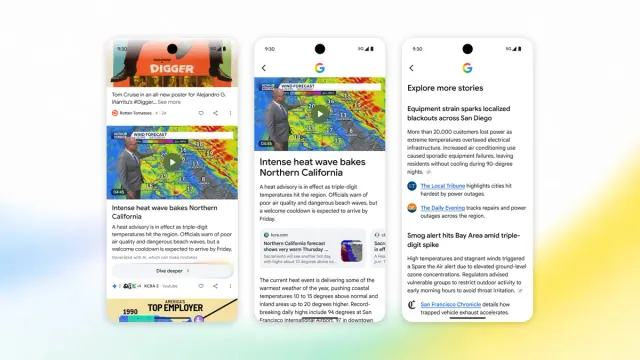
AI Overviews have accelerated the same trend dramatically. They now appear in approximately 16% of desktop searches and 41% of mobile searches, according to BrightEdge. That is a substantial portion of high-intent queries that now get answered directly on the results page, before a user has any reason to visit your site.
2. A growing share of users is skipping Google entirely
This is the more consequential shift, because it is not a Google product change you can optimize around. It is a behavior change.
Pew Research found that nearly 52% of U.S. adults now use AI tools on a regular basis. McKinsey's research puts the share of employed Americans using AI at work at around 28%. When someone opens ChatGPT or Perplexity and types a question, they typically get a complete answer without visiting any website. Your content may have shaped that answer. You get no traffic, no session, no attribution, and no conversion opportunity.
The impact is not evenly distributed across content types. KEO Marketing's data shows that informational content has absorbed the hardest hits, with some sectors reporting organic traffic declines between 15% and 64% since AI Overviews launched. News publishers have been particularly exposed. Similarweb data shows Google referrals to news sites fell 33% globally in the twelve months ending November 2025.
If your content strategy leans heavily on top-of-funnel informational content designed to capture search traffic, you are operating in the segment that has been hit hardest.
Why Your Current Metrics Are Not Telling You the Full Story
Here is a measurement problem most teams have not fully reckoned with yet.
The standard content marketing dashboard, which tracks impressions, clicks, CTR, sessions, bounce rate, and page views, measures what happens on your website. It does not measure what happens upstream, in the AI-generated answers that are now intercepting a significant portion of your potential visitors before they ever reach you.
You could be getting cited constantly in ChatGPT, Perplexity, and Google's AI Overviews and your Google Analytics would show nothing. Your traffic numbers would look like they are declining when in reality your brand is gaining influence in a channel you are simply not measuring.
This is not a minor gap. It is a blind spot that distorts your entire content strategy assessment.
The five metrics that actually reflect AI-era discoverability
AI citations tell you how often your owned content is directly cited when an LLM answers a relevant query. A citation is a signal that three things are true: your content is topically relevant, it is structured in a way that LLMs can parse and retrieve efficiently, and your domain carries enough authority to be considered trustworthy.
Brand mentions without citations are a separate and important signal. LLMs frequently mention brands without citing their owned content, pulling instead from review platforms, community forums, third-party articles, and even competitor comparisons. A mention without a citation tells you the broader web is talking about you, but your content is not being treated as the primary source. Knowing the difference helps you decide where to invest next.
Share of voice across AI platforms compares how often your brand is cited versus competitors when the same category-relevant prompts are run across multiple LLMs. Think of this as your equivalent of SERP ranking in the AI era.
Brand sentiment in AI responses tracks whether AI-generated answers frame your brand positively, neutrally, or negatively. This can surface reputation issues you would never catch in traditional analytics.
AI-influenced traffic and conversion rate measures how much of your site traffic originates from LLM referrals. Early data from Klaviyo suggests this traffic converts three to five times higher than other sources. The volume is still modest for most brands, but the quality signal is strong enough that you want to be tracking it now.
Several platforms are emerging specifically to track these metrics at scale. Even a basic manual benchmark, where you prompt major LLMs with your key target queries and log where and how your brand appears, is meaningfully better than not measuring at all.
How to Optimize Your Content for AI Visibility
The good news is that you do not need to burn down your content operation and start over. Many of the fundamentals that made content perform well in traditional search still apply. What has changed is the weighting, and a few outdated tactics that need to go.
1. E-E-A-T is the foundation, not a checkbox
Experience, Expertise, Authoritativeness, and Trustworthiness were central to Google's quality evaluation before AI Overviews existed. They remain the dominant signals in how LLMs evaluate and select sources to cite.
LLMs are trained on the web. They have absorbed the signals that indicate credibility: who links to a source, whether the author has verifiable credentials, whether the content demonstrates genuine depth versus surface-level coverage, and whether the information holds up against other sources. If your content is written by identifiable subject matter experts, covers topics with real specificity, and earns citations from credible external sites, you will consistently outperform thinner content regardless of how well that content is technically optimized.
This is not a new principle. But many content teams have drifted toward volume over expertise, particularly as AI writing tools made high-volume production cheaper. That drift is now showing up in performance data.
2. Content structure has become a competitive advantage
LLMs do not read your content the way a human reader does. They retrieve passages that most directly answer the query being processed. If your best insights are buried inside long narrative paragraphs, they are structurally harder to retrieve than a competitor's content that organizes the same information around clear questions and direct answers.
Practical implications of this:
Adding a Q&A section to your existing high-value content is one of the highest-leverage updates you can make today. You do not need to rewrite the whole piece. Add a section at the bottom that surfaces the key questions your content answers, followed by concise direct responses.
Use subheadings that mirror the actual questions your audience asks. Not creative headings optimized for human intrigue, but functional headings that signal to both readers and retrieval systems exactly what the section covers.
Avoid burying your key point at the end of a long paragraph as a conclusion. Lead with the answer, then support it.
3. Human-written, human-reviewed content is outperforming AI-generated content in measurable ways
This one matters more than most teams currently appreciate.
After Google's most recent core update, Search Engine Land reported that mass-produced AI-generated content saw an 87% drop in rankings and citation frequency. Keyword-optimized content produced at scale dropped 63%. LLMs are getting progressively better at recognizing synthetic writing patterns and deprioritizing that content both in search rankings and in citation selection.
The pressure that built throughout 2024 to produce more content faster using AI tools created a quality problem that is now visible in the performance data. The brands that resisted that pressure, or used AI selectively as a drafting and editing aid rather than a content generator, are seeing the payoff now.
If you are using AI in your content workflow, the practical rule is to treat it as a research assistant and first-draft tool, then invest real human editorial judgment in the final output. A review pass specifically looking for generic phrasing, unsupported claims, and a synthetic tone is worth building into your process.
4. Fresh content gets prioritized over stale content
Answer engines factor publication and update dates into their source selection. A well-structured, authoritative piece from 2022 will frequently lose out to a less polished but more recently updated version of the same topic.
Run an audit of your highest-traffic pages and core product and category content. Flag anything with outdated statistics, examples that reference old tools or contexts, or sections that do not reflect how the landscape has changed. Refreshing these with current data and updated examples is a faster path to recovered visibility than creating new content from scratch.
5. Promotional language will hurt your citation rate
AI systems are selecting sources the way a careful researcher would: they prefer sources that appear objective, well-supported, and free of obvious commercial bias. Content that leads with product claims, brand-forward language, or promotional framing will routinely lose out to more neutral sources covering the same topic.
This does not mean you cannot write about your own product. It means you need to write about it the way a credible third party would. Acknowledge real tradeoffs. Provide context that helps the reader make an informed decision, even when that decision might not always be your product. Let the facts carry the argument rather than assertive brand language.
Comparison content and structured listicles work particularly well in this context because they present information in a framework that AI systems can parse cleanly and cite with confidence.
Your External Content Ecosystem Is a Strategic Asset, Not a PR Exercise
One of the clearest patterns in how LLMs decide which brands to mention is this: they look for consensus across multiple independent sources, not just your owned content. A brand that appears only on its own blog, no matter how well-optimized that blog is, will lose visibility to a competitor with fewer owned assets but stronger third-party coverage.
This reframes how you should think about external content investment.
1. Review platforms carry more weight than most B2B teams realize
Reviews on G2, Capterra, Trustpilot, and Google are frequently incorporated into LLM training data. User-generated content on Reddit, industry forums, and community platforms is heavily indexed and often cited when LLMs are surfacing real-world user perspectives on a product or category.
If your review profile is thin or your brand is underrepresented in the communities where your buyers are active, that gap is now a visibility problem, not just a reputation management issue.
2. Content partnerships generate compounding returns
Sponsored articles, contributed pieces in industry publications, and newsletter placements accomplish two things at once. They drive referral traffic from audiences that are not reachable through search, and they generate the kind of trusted external citations that improve your AI share of voice over time.
Newsletter audiences are growing as readers actively seek curated, expert-authored content over algorithmically ranked search results, according to the Reuters Institute Digital News Report. This makes newsletter sponsorships more valuable than they were two years ago, both for direct reach and for the citation signal they generate.
YouTube is worth particular attention here. Citations from YouTube are especially strong in AI-generated responses, and ChatGPT shows a documented preference for authoritative video creators when surfacing informational content, according to Ahrefs research. If video is not part of your content mix, this is a reason to reconsider.
3. Consistency of story across external sources compounds over time
The goal of external content investment is not to manufacture a surge of brand mentions. It is to build a consistent, coherent narrative about what your brand does and why it matters, across enough credible independent sources that LLMs encounter that story repeatedly when processing your category.
Consistency here matters as much as volume. Mixed signals across your review profile, partner content, and third-party coverage will dilute your AI share of voice even if the total number of mentions is high.
Your Landing Pages Need to Work Harder With Less Traffic
With organic traffic down 30% or more for many sites (KEO Marketing, 2025), the visitors who do arrive at your site are more intentional than average. They came through despite more friction than existed two years ago. That makes them more valuable, and it makes your conversion rate on key landing pages a more consequential variable than it used to be.
The principle for high-converting landing pages is the opposite of what makes content perform well in AI search. Where your AI-optimized content should be detailed, well-sourced, and structured for LLM retrieval, your landing pages should be stripped down to a single offer, a single message, and a single call to action.
Your headline should carry the complete value proposition. Every supporting element below it should reinforce one decision, not introduce new ones. If you have multiple conversion goals, build separate landing pages for each. A page trying to serve multiple purposes will underperform a focused page on every goal it is attempting to serve.
If a visitor needs to scroll significantly before encountering the core offer, that is a structural problem worth fixing before you invest further in traffic acquisition.
A Practical Starting Point
If you are looking for where to begin, here is a sequenced approach that reflects where the highest-leverage opportunities sit right now.
Start by establishing your AI visibility baseline. Manually prompt ChatGPT, Perplexity, Google's AI Overviews, and one other LLM with your ten most important category and product queries. Log where you appear, whether you are cited or only mentioned, and how your brand is framed. This takes a few hours and gives you a baseline you can measure against in ninety days.
Then audit your top ten organic pages for structure. Add Q&A sections, refresh outdated data, and rewrite any section that leads with promotional language rather than objective information.
Identify two or three external channels where your competitors have stronger coverage than you do, whether that is a specific review platform, an industry publication, or a community forum. Build a plan to close that gap over the next two quarters.
Finally, review your key landing pages for focus. If any of them are serving multiple conversion goals, separate them.
None of this is complicated. Most of it is work you have probably known you should be doing. The difference now is that the cost of not doing it is higher than it used to be.
The Bottom Line
The decline in organic traffic is not a phase that will correct itself when the algorithm stabilizes or when AI tools lose their novelty. The behavioral shift is real and it is accelerating. A content strategy built entirely around ranking for clicks is no longer sufficient as a standalone approach.
What replaces it is a dual mandate: optimize your owned content to be cited by AI systems, and build an external brand presence consistent and credible enough that LLMs encounter your brand repeatedly when processing your category.
The good news, if you are looking for it, is that these goals align closely with what strong content marketing has always required. Real expertise. Clear structure. Trusted external credibility. Content written for readers, not algorithms.
The brands that built their content programs on those principles before the disruption are navigating this transition better than the ones that optimized primarily for search volume and keyword density. That tells you something about where to invest from here.
Get the monthly briefing
One high-signal edition a month on B2B growth, AI search, and agentic marketing. No noise, unsubscribe anytime.