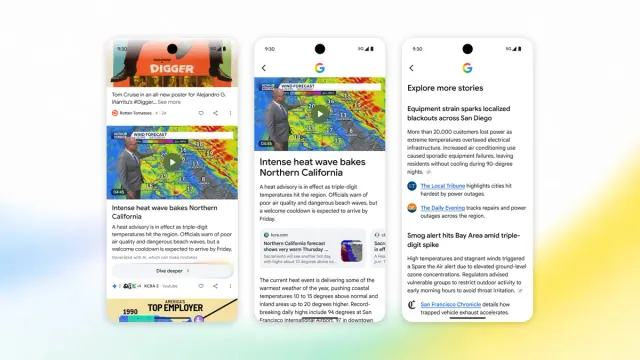
As a Head of Growth Marketing at a SaaS company, I've observed a significant shift: traditional SEO traffic is declining, while AI-driven traffic is emerging as a powerful new channel. We recently closed a substantial deal directly from ChatGPT referral traffic, highlighting the immense potential of AI visibility. While the volume from AI referrals may currently be small compared to Google traffic, the conversion rate is exceptionally high. This indicates that future customers are increasingly using AI to find solutions, and your SaaS needs to be visible where they are looking.
The landscape of search is evolving into conversational AI. Users are no longer just typing in simple queries like "best CRM software"; they are asking nuanced questions such as, "What CRM should I use for a 50-person sales team with complex deal cycles?". AI tools like ChatGPT, Claude, Perplexity, and Gemini directly answer these questions, often without directing users to your website. This presents both a challenge, as your landing pages might be bypassed, and an opportunity, as highly qualified prospects are pre-educated about your solution before engaging with sales.
AI Platform Optimization Frameworks
To succeed in the AI era, it's crucial to understand how different AI platforms process content and to tailor your strategy accordingly.
1. Google AI Overviews & Gemini
How Google Processes Content
| Mechanism | Description | Impact on Your Content |
| Query Fan-Out | Breaks complex questions into sub-queries, searches multiple subtopics | Create comprehensive topic clusters covering all related subtopics |
| Knowledge Graph Integration | Leverages entity relationships and structured data | Implement consistent entity mentions and schema markup |
| Multimodal Processing | Processes text, voice, images together | Include rich media with descriptive metadata |
| Zero-Click Prioritization | Provides complete answers without requiring clicks | Lead with direct, complete answers in first 50-70 words |
Content Optimization Framework
| Strategy | Implementation | Expected Outcome |
| Comprehensive Topic Coverage | Create pillar pages with 3000+ words covering all aspects of your core topics | Higher likelihood of being cited for complex queries |
| Answer-First Structure | Begin every piece with TL;DR summary answering primary query | Increased zero-click visibility |
| Conversational Tone | Write like you're answering a friend's question | Better match for AI conversation patterns |
| Logical Hierarchy | Use clear H1-H3 structure, one idea per paragraph | Easier for AI to extract and structure information |
Marketing Strategy for Mentions
| Channel | Tactic | Timeline | Effort Level |
| SEO-Optimized Content | Publish 2-3 comprehensive guides monthly | 3-6 months | High |
| Industry Publications | Guest post on 5-10 industry blogs monthly | 2-3 months | Medium |
| Reddit/Quora Participation | Answer 10-15 questions weekly in your niche | 1-2 months | Medium |
| Schema Markup Implementation | Add FAQ, Article, Product schemas to all content | 1 month | Low |
2. ChatGPT (OpenAI)
How ChatGPT Processes Content
| Mechanism | Description | Impact on Your Content |
| Deep Research Agent | Uses browser tool to scrape hundreds of web pages | Ensure your content is easily scrapable with clean HTML |
| Multi-Step Synthesis | Conducts iterative research, building on previous findings | Create content that naturally links to related resources |
| Bing Integration | Leverages Bing search index for real-time information | Optimize for Bing SEO alongside Google |
| Authority Prioritization | Selects credible, authoritative sources | Build strong E-E-A-T signals and backlink profile |
Content Optimization Framework
| Strategy | Implementation | Expected Outcome |
| Front-Loaded Value | Put key information in first 200 words with rich context | Higher scraping priority |
| Q&A Architecture | Structure content as question-answer pairs | Direct match for ChatGPT's response format |
| Semantic Richness | Use varied terminology and consistent entity naming | Better context understanding |
| Original Data Integration | Include unique statistics with methodology | Become the go-to source for specific data points |
Marketing Strategy for Mentions
| Channel | Tactic | Timeline | Effort Level |
| Forum Participation | Active presence on Stack Overflow, Reddit, industry forums | 2-3 months | High |
| Academic/Research Citations | Publish white papers, contribute to industry research | 6-12 months | High |
| News Coverage | Regular PR, expert commentary, trend insights | 3-6 months | Medium |
| Partnership Content | Co-create content with complementary SaaS tools | 1-3 months | Medium |
3. Perplexity AI
How Perplexity Processes Content
| Mechanism | Description | Impact on Your Content |
| Multi-LLM Processing | Uses GPT-4, Claude, Gemini simultaneously | Content must be clear across different AI models |
| Real-Time Web Search | Conducts fresh searches for each query | Keep content updated with "last modified" dates |
| Inline Citation System | Provides direct links to source material | Optimize for click-through with compelling headlines |
| Conversational Follow-Up | Processes follow-up questions and related queries | Create comprehensive FAQ sections |
Content Optimization Framework
| Strategy | Implementation | Expected Outcome |
| Search Intent Alignment | Research and address specific audience questions | Higher relevance scoring |
| Parse-Friendly Structure | Use bullet points, numbered lists, short paragraphs | Easier extraction and citation |
| Credible Source Strategy | Link to authoritative resources with descriptive anchor text | Increased trust signals |
| FAQ Integration | Address 20-30 related questions per topic | Capture follow-up queries |
Marketing Strategy for Mentions
| Channel | Tactic | Timeline | Effort Level |
| Community Q&A | Answer questions on Quora, Reddit, industry forums | 1-2 months | Medium |
| Thought Leadership | Regular LinkedIn articles, Twitter threads | 2-3 months | Medium |
| Industry Reports | Publish quarterly insights, trend analysis | 3-6 months | High |
| Podcast Appearances | Guest on 2-3 industry podcasts monthly | 2-4 months | Medium |
4. Claude AI
How Claude Processes Content
| Mechanism | Description | Impact on Your Content |
| Constitutional AI Training | Adheres to safety, accuracy, security principles | Ensure content is ethical, balanced, well-sourced |
| Real-Time Web Search | Verifies information with current web data | Maintain accurate, up-to-date information |
| Contextual Understanding | Processes nuance and complex relationships | Provide comprehensive context and examples |
| Source Verification | Emphasizes credible, verifiable sources | Include direct citations and primary sources |
Content Optimization Framework
| Strategy | Implementation | Expected Outcome |
| Contextual Depth | Explore concept relationships and broader implications | Preferred for complex explanations |
| Ethical Alignment | Demonstrate fairness, transparency, accountability | Higher trust and authority scores |
| Verification-Ready Sourcing | Include explicit citations to primary sources | Increased credibility for fact-checking |
| Collaborative Design | Create templates, frameworks, actionable guides | Better match for Claude's "Artifacts" feature |
Marketing Strategy for Mentions
| Channel | Tactic | Timeline | Effort Level |
| Educational Content | Publish comprehensive guides, tutorials, frameworks | 2-4 months | High |
| Industry Analysis | Provide balanced perspectives on industry trends | 3-6 months | Medium |
| Case Study Documentation | Detailed customer success stories with metrics | 1-3 months | Medium |
| Open Source Contributions | Contribute to relevant GitHub projects, documentation | 3-6 months | Medium |
5. Microsoft Copilot
How Copilot Processes Content
| Mechanism | Description | Impact on Your Content |
| Dual-Mode Operation | Separates enterprise data from web data | Clearly distinguish public vs. internal information |
| Researcher Agent | Mimics human research methodology | Structure content for iterative discovery |
| Enterprise Context | Focuses on business applications and scalability | Emphasize enterprise features and compliance |
| Bing Index Integration | Leverages Bing search for web mode | Optimize for Bing SEO best practices |
Content Optimization Framework
| Strategy | Implementation | Expected Outcome |
| Enterprise Problem-Solution Mapping | Address specific business challenges with direct solutions | Higher relevance for B2B queries |
| Data-Driven Substantiation | Support claims with verifiable statistics and case studies | Increased authority for business decisions |
| Enterprise Context Alignment | Focus on scalability, security, compliance, integration | Better match for enterprise searches |
| Summarization-Optimized Structure | Clear headings, bullet points, concise paragraphs | Easier for AI to extract key points |
Marketing Strategy for Mentions
| Channel | Tactic | Timeline | Effort Level |
| LinkedIn Thought Leadership | Weekly posts on business efficiency, digital transformation | 1-2 months | Medium |
| Industry Analyst Relations | Engage with Gartner, Forrester, industry research firms | 6-12 months | High |
| Enterprise Case Studies | Document large customer implementations | 2-4 months | Medium |
| Microsoft Partner Program | Become official Microsoft partner, co-marketing | 3-6 months | High |
Universal AI Optimization Requirements
Regardless of the specific AI platform, certain foundational elements are critical for optimal AI visibility.
Technical Foundation (All Platforms)
| Element | Implementation | Priority | Timeline |
| Schema Markup | FAQPage, HowTo, SoftwareApplication schemas | High | 1 month |
| Clean HTML | Well-formed structure, clear headings, descriptive metadata | High | 1 month |
| Mobile-First Design | Responsive design, <2.5s load times | High | 1 month |
| Crawlability | Optimized robots.txt, XML sitemaps | High | 1 week |
E-E-A-T Trust Signals
AI models prioritize trustworthy sources, making E-E-A-T (Experience, Expertise, Authoritativeness, Trustworthiness) a universal AI currency.
| Trust Factor | SaaS Implementation | AI Impact |
| Experience | Customer case studies, product demos, real implementation stories | AI cites your content for "how-to" and practical application queries |
| Expertise | Industry credentials, certifications, thought leadership content | Positions your content as the go-to source for complex technical explanations |
| Authoritativeness | Industry recognition, media mentions, analyst reports | Increases likelihood of AI citing you as a primary source |
| Trustworthiness | Security certifications, transparent pricing, strong reviews | Builds AI confidence in recommending your solution |
Semantic SEO: Speaking AI's Native Language
Forget keyword stuffing; AI understands concepts, relationships, and context. Your content needs to reflect this sophistication.
Topic Clusters Strategy:
- Build comprehensive content hubs around core problems your SaaS solves
- Create pillar pages supported by detailed sub-articles
- Maintain consistent entity mentions (your brand, product names, key features)
- Anticipate conversational queries like "How does [your SaaS] help with [specific use case]?"
Omnipresence Strategy: Be Everywhere Your Prospects Are
AI doesn't solely rely on your website for information; it synthesizes data from a multitude of sources, including review sites, social media, forums, industry publications, and podcasts. To be recommended by AI, your brand needs to show up consistently across these touchpoints.
High-Impact Channels (80% of effort)
| Channel | Platforms | Content Strategy | AI Impact | Monthly Effort |
| Review Platforms | G2, Capterra, TrustRadius, GetApp | Encourage detailed reviews, respond to all feedback | High - AI frequently cites review data for recommendations | 10 hours |
| Community Forums | Reddit, Quora, Stack Overflow, industry forums | Provide helpful answers, share expertise authentically | High - AI values community-validated information | 20 hours |
| Industry Publications | Trade magazines, blogs, newsletters | Guest posts, expert commentary, data contributions | High - AI treats industry publications as authoritative sources | 15 hours |
| Professional Networks | LinkedIn Groups, Slack communities, Discord servers | Active participation, valuable contributions, relationship building | Medium - Builds authority and generates organic mentions | 10 hours |
| Podcast Ecosystem | Industry podcasts, interview shows, audio content | Regular appearances, host your own show, sponsor relevant content | Medium - Transcripts provide rich, conversational content | 8 hours |
Supporting Channels (20% of effort)
| Channel | Platforms | Content Strategy | AI Impact | Monthly Effort |
| Social Media | LinkedIn, Twitter, Facebook, industry-specific platforms | Share insights, engage in conversations, build thought leadership | Medium - Adds context and authority signals | 5 hours |
| Video Platforms | YouTube, Vimeo, platform-specific video content | How-to videos, product demos, thought leadership | Medium - Transcripts and descriptions feed AI knowledge | 6 hours |
| News & PR | Industry news sites, press releases, journalist relationships | Regular PR cadence, expert commentary, trend insights | High - News sources carry significant AI weight | 4 hours |
| Documentation Sites | GitHub, technical wikis, developer communities | Open-source contributions, technical documentation | High - AI values technical accuracy and implementation details | Not specified |
| Partner Ecosystem | Integration marketplaces, partner directories, co-marketing | Joint content, case studies, integration guides | Medium - Validates product utility and compatibility | Not specified |
Content That Converts in the AI Era
For SaaS companies, AI-ready content should directly address user problems and provide clear solutions.
Product Pages That AI Loves:
- Lead with the core problem you solve: "Our [SaaS] helps [audience] achieve [benefit] by [mechanism]"
- Use clear problem-solution frameworks for every feature
- Include Q&A sections addressing common user questions
- Provide quantifiable results and customer success metrics
Content Format Hierarchy:
| Priority | Format | AI Value | Implementation |
| High | FAQ sections | Direct question-answer pairs | Structured with FAQPage schema |
| High | How-to guides | Step-by-step instructions | Clear numbered lists, HowTo schema |
| Medium | Case studies | Real-world application proof | Problem-solution-results format |
| Medium | Feature comparisons | Competitive differentiation | Structured comparison tables |
| Low | Brand storytelling | Context and authority | Supporting content, not primary |
Authority Building for AI Recognition
- Original Research & Data: Publish industry surveys and reports, share unique internal data and insights, create benchmark studies and trend analyses.
- Expert Positioning: Guest posts on high-authority industry sites, analyst report participation (Gartner, Forrester, G2), speaking engagements and podcast appearances.
Measuring Success: KPIs That Actually Matter
Focus on AI visibility and conversion quality, moving beyond vanity metrics.
Primary KPIs for AI Visibility
| Metric Category | Specific Measures | Tracking Method |
| AI Mentions | Frequency in AI responses, share of voice | Manual checks, specialized monitoring tools |
| Referral Quality | Traffic from AI platforms, conversion rates | UTM tracking, conversion analysis |
| Content Performance | Dwell time on AI-referred traffic | Analytics deep-dive, user behavior tracking |
| Brand Recognition | Unlinked mentions across platforms | Social monitoring, news aggregation |
| SERP Features | Featured snippets, PAA boxes | SEO tools, manual SERP analysis |
Monthly AI Visibility Audit
- Check AI Responses: Search for your target keywords across major AI platforms
- Monitor Competitor Mentions: See who's getting cited for your key topics
- Analyze Referral Traffic: Track AI-driven visitors and their conversion paths
- Update Content: Refresh based on AI response gaps and opportunities
The Content Multiplication Strategy
Smart marketers create content that naturally multiplies across channels.
Content Multiplication Framework:
| Original Content | Channel Adaptations | AI Visibility Boost |
| Case Study | → Blog post, → LinkedIn article, → Podcast discussion, → Reddit AMA, → Review site testimonial | 5x mention opportunities |
| Product Feature | → Help docs, → YouTube demo, → Twitter thread, → Forum answer, → Industry guest post | 5x technical validation |
| Industry Report | → Press release, → Podcast interview, → LinkedIn carousel, → Reddit discussion, → Quora answer | 5x authority signals |
| How-to Guide | → Blog post, → Video tutorial, → Stack Overflow answer, → Community forum post, → Partner content | 5x educational value |
The Attribution Game: Making Sure AI Knows It's You
To ensure AI recognizes your content as the source of valuable information, you need clear attribution.
Attribution Essentials:
- Consistent NAP (Name, Address, Phone) across all platforms
- Branded content signatures that clearly identify your company
- Unique data points that can only come from your organization
- Consistent messaging across all channels and touchpoints
- Clear authorship on all content (individual experts + company association)
Implementation Timeline: Your 90-Day AI Visibility Sprint
Days 1-30: Foundation + Omnipresence Setup
- Audit current content for AI-friendly structure
- Implement critical schema markup
- Create comprehensive FAQ sections
- Set up profiles on key review platforms
- Identify and join 5-10 industry communities
- Launch consistent social media presence
Days 31-60: Content Expansion + Community Building
- Build topic clusters around core use cases
- Develop original research and data content
- Create platform-specific content variations
- Begin active participation in forums and communities
- Secure first 2-3 podcast appearances
- Publish first guest posts on industry sites
Days 61-90: Optimization + Scale
- Analyze AI mention patterns and gaps
- Refine content based on performance data
- Expand successful content formats
- Implement content multiplication strategy
- Build ongoing community engagement processes
- Establish regular PR and thought leadership cadence
FAQ: Your AI Visibility Questions Answered
How long does it take to see results from AI optimization?
Unlike traditional SEO, AI visibility can happen relatively quickly. We've seen mentions within 2-3 weeks of optimizing content, with meaningful traffic taking 6-8 weeks.
How important is it to be active on every single platform?
Quality over quantity. Focus on 3-5 platforms where your audience is most active, then expand. It's better to dominate a few channels than to be mediocre everywhere.
Should I optimize differently for each AI platform?
Yes, but start with universal best practices (clear structure, direct answers, authoritative sourcing) then add platform-specific elements.
How do I track AI referral traffic?
Use UTM parameters when possible, monitor referral sources in analytics, and set up alerts for branded searches. Attribution varies across AI platforms.
What's the biggest mistake SaaS companies make with AI optimization?
Treating it like traditional SEO. AI needs direct answers, not keyword-stuffed content. Focus on solving problems clearly and concisely.
How do I avoid looking spammy when participating in communities?
Lead with value, not promotion. Answer questions genuinely, share insights, and mention your product only when directly relevant. A 90/10 rule (90% helpful, 10% subtle promotion) works well.
Is AI optimization worth the investment for small SaaS companies?
Absolutely. Smaller companies can move faster, and AI democratizes visibility—you don't need massive domain authority to get cited if your content directly answers user questions.
How do I know if my content is AI-ready?
Ask yourself: "If someone asked an AI about this topic, would my content provide a clear, direct answer?" If not, restructure it until it does.
TL;DR
The AI revolution is here. Your prospects are asking AI about their problems, and AI is either recommending your SaaS or it's not. Here's your immediate action plan:
- Audit your content for AI-friendly structure (direct answers, clear headings, FAQ sections)
- Implement schema markup for FAQs, how-to guides, and product pages
- Build an omnipresence strategy across review sites, forums, and industry publications
- Create topic clusters around core problems your SaaS solves
- Monitor AI mentions across major platforms monthly
- Track referral traffic from AI platforms and analyze conversion quality
- Optimize for conversations, not just searches
The high conversion rate from AI traffic proves that AI-referred prospects are highly qualified and ready to buy. Don't delay; your competitors are already optimizing for AI visibility. It's time to play offense in the AI era and ensure your content is the star of the conversation when your prospects ask AI about solutions.
Get the monthly briefing
One high-signal edition a month on B2B growth, AI search, and agentic marketing. No noise, unsubscribe anytime.