Picture this: You've just closed three deals in a row. Different industries, different sizes, different needs—but something clicked. Your product solved a real problem, the sales cycle was smooth, and they're already asking about expanding their usage.
Now imagine if you could replicate that success consistently.
That's the power of a properly built Ideal Customer Profile (ICP). But here's the problem: most ICPs are glorified demographic surveys that miss the human element entirely.
"SaaS companies, 100-500 employees, uses Salesforce."
That's not an ICP—that's a LinkedIn search filter.
A real ICP digs deeper. It understands not just what your ideal customers look like, but why they buy, how they decide, and when they're ready to change.
Let's build one that actually drives results.
The Four Pillars of Customer Intelligence
Think of your ICP as a four-dimensional map. Each dimension reveals something crucial about your best-fit customers:
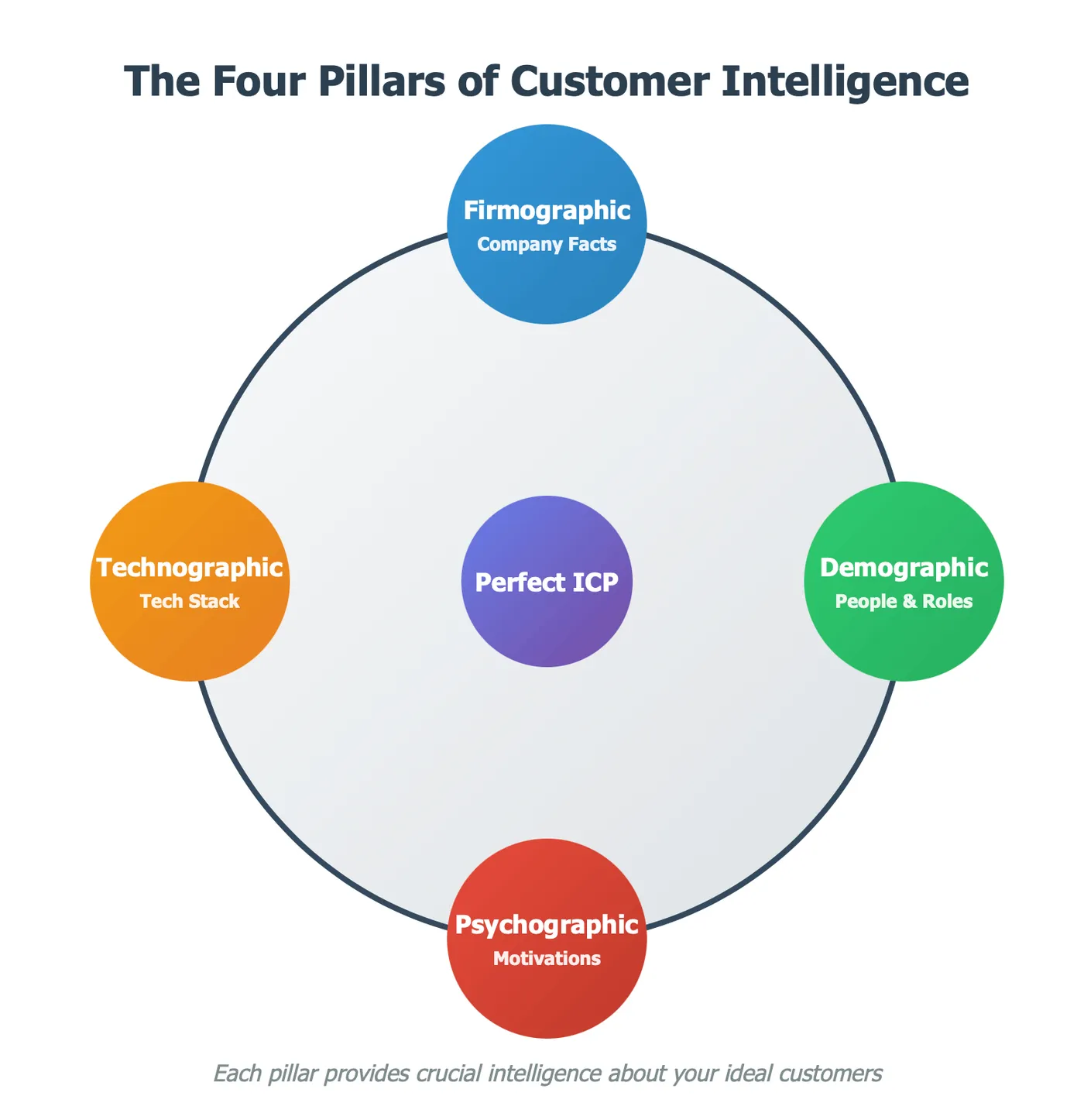
1. The Company Blueprint (Firmographics)
This is your foundation—the basic facts about the organizations you serve best.
Industry Focus: Where does your solution create the most value? A customer success platform might thrive in subscription businesses but struggle in one-time purchase models.
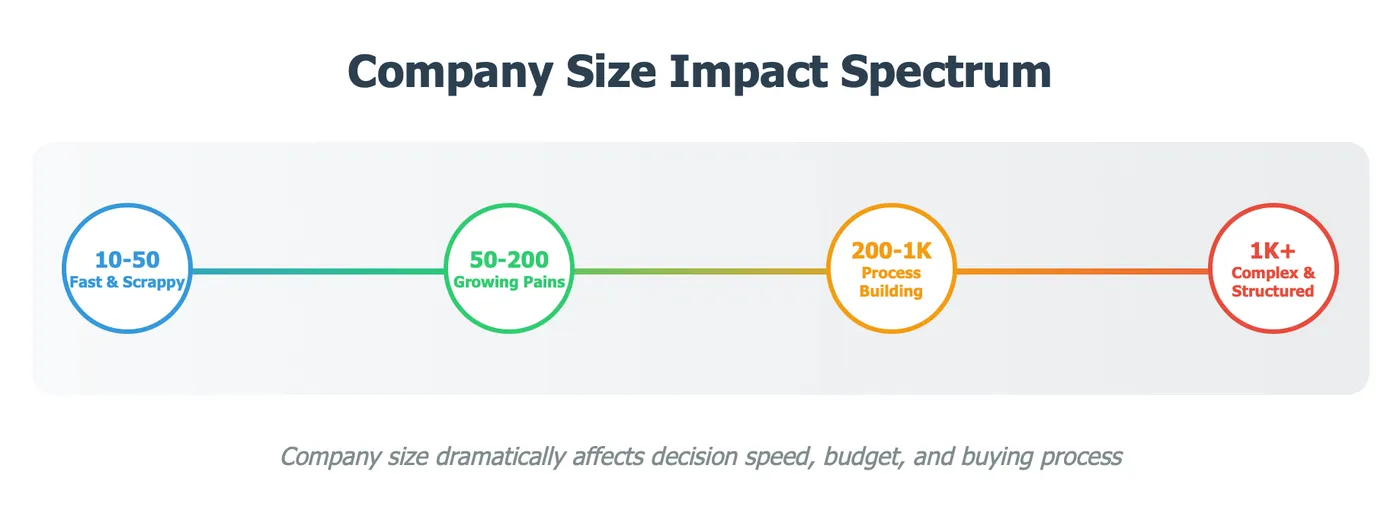
Company Size: Size shapes everything from decision speed to budget reality:
Revenue Range: A $10M company and a $100M company have fundamentally different priorities, even in the same industry.
Growth Stage:
- Startups need speed and flexibility
- Scale-ups need systems and processes
- Enterprises need optimization and control
Geographic Considerations: Buying patterns vary dramatically by region. Silicon Valley moves fast and takes risks. European enterprises prioritize compliance. Asian markets often require local partnerships.
2. The Human Element (Demographics)
Behind every company logo are real people with real problems, ambitions, and constraints.
Role and Responsibilities: Don’t just list job titles—think about what each person really cares about. A Head of Sales wants to hit sales targets. A CFO is focused on spending and saving money. A CTO is concerned with managing tech problems and keeping systems running smoothly.
Seniority and Influence: A newly hired VP might be eager to make their mark with new tools. A long-tenured director might resist change that threatens their established processes.
Department Dynamics: Which teams feel the pain your product solves? Who benefits from the outcome? Sometimes the buyer and the beneficiary are different people entirely.
Experience Level: Someone managing their first team has different needs than a seasoned executive who's scaled multiple organizations.
3. The Technology Landscape (Technographics)
In SaaS, integration capabilities can make or break a deal.
Current Tech Stack: What tools are they already using? Can you integrate seamlessly? Are there obvious gaps in their current setup that you fill?
Technology Adoption Patterns:
- Early adopters: Willing to try new solutions, comfortable with some risk
- Mainstream adopters: Want proven solutions with solid references
- Laggards: Need overwhelming evidence before making changes
Infrastructure Preferences: Cloud-first companies move faster than those with legacy on-premise systems. Companies standardized on AWS might prefer AWS-native solutions.
Integration Requirements: How complex is their current setup? Do they need extensive customization? Can they handle API-based integrations?
4. The Motivation Map (Psychographics)
This is where most ICPs fail—and where yours can excel.
Pain Points: What specific problems make them lose sleep? Quantify the impact. "Manual reporting takes 2 days per month" is more powerful than "reporting is painful."
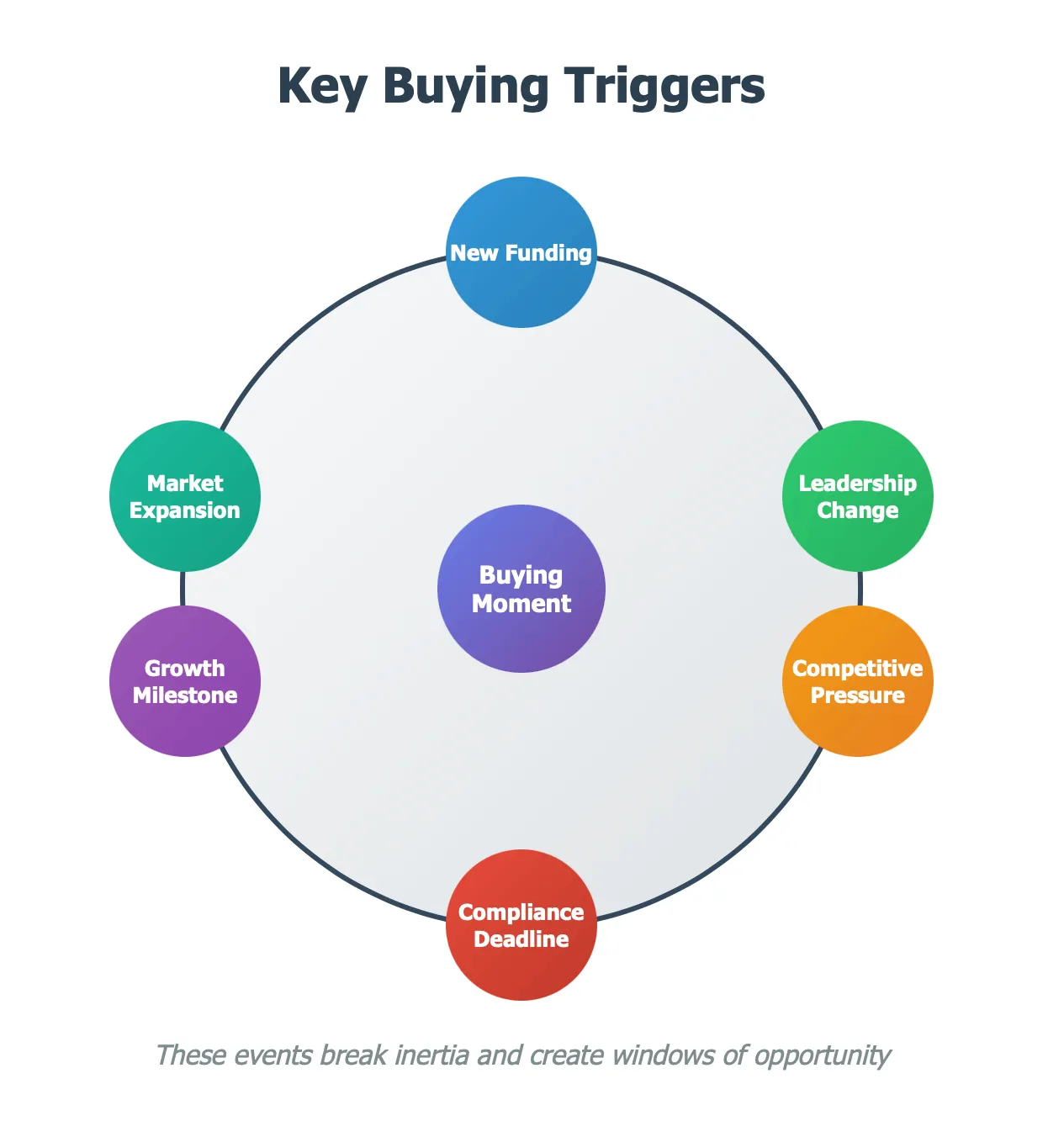
Buying Triggers: What events make them ready to change?
Organizational Culture: Are they risk-averse or innovation-hungry? Do they prefer proven solutions or cutting-edge tools? Is decision-making centralized or distributed?
Success Metrics: What does winning look like for them? Increased revenue? Reduced costs? Better compliance? Faster time-to-market?
The Buying Committee: Who Really Makes Decisions
Modern B2B purchases rarely involve a single decision-maker. Understanding the buying committee is crucial for sales success.
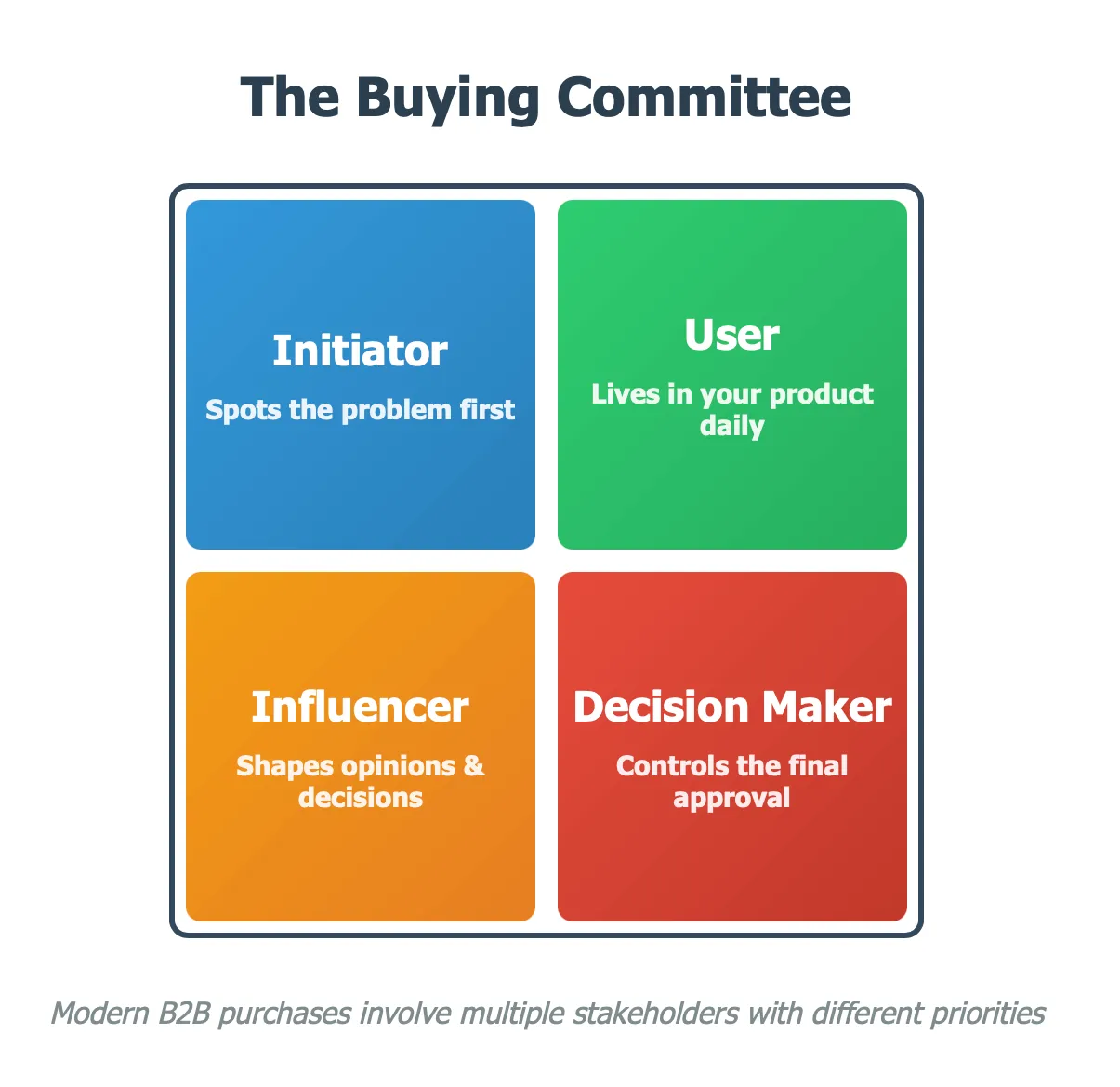
The Initiator: The Problem Spotter
They first recognize the need for change. Often an individual contributor or mid-level manager who lives with the pain daily. They start the internal conversation but rarely control the budget.
Engagement Strategy: Help them build a compelling business case. Arm them with data and talking points to influence others.
The User: The Daily Driver
They'll actually use your product. Their adoption determines your long-term success, even if they don't choose the vendor.
Engagement Strategy: Focus on ease of use, training resources, and workflow integration. Make them your champion by making their life easier.
The Influencer: The Opinion Shaper
They don't use the product or control the budget, but their opinion carries weight. Often includes IT (security concerns), Legal (compliance requirements), or Finance (budget implications).
Engagement Strategy: Understand their specific concerns and address them proactively. Provide the documentation and assurances they need to advocate for you.
The Decision Maker: The Final Authority
They control the budget and make the final call. Usually a VP or C-level executive who cares about business impact more than product features.
Engagement Strategy: Focus on ROI, risk mitigation, and strategic alignment. Speak their language of business outcomes, not product capabilities.
Putting It All Together: Your ICP in Action
A complete ICP isn't just a customer description—it's a strategic framework that guides:
Marketing Strategy: Which channels reach your ideal customers? What messages resonate? What content do they consume?
Sales Approach: How long are typical sales cycles? What objections come up repeatedly? Which stakeholders need to be involved?
Product Development: What features matter most? What integrations are table stakes? Where should you invest development resources?
Customer Success: What does successful onboarding look like? When are customers most likely to churn? How can you drive expansion?
Making Your ICP a Living Document
Your ICP isn't carved in stone. It should evolve as you learn more about your customers and as your market changes.
Quarterly Reviews: Analyze your best and worst customers. What patterns emerge? Where was your ICP accurate or off-base?
Win/Loss Analysis: Why did you win certain deals? Why did others slip away? What does this tell you about your ideal customer profile?
Customer Interviews: Talk to your happiest customers regularly. How have their needs evolved? What challenges are they facing now?
Market Evolution: Industries change, new competitors emerge, and economic conditions shift. Your ICP should reflect these realities.
The Bottom Line: From Spray and Pray to Surgical Precision
A well-built ICP transforms your entire go-to-market strategy. Instead of casting a wide net and hoping for the best, you can:
- Target your marketing spend on the highest-probability prospects
- Craft messaging that resonates with real pain points
- Shorten sales cycles by focusing on qualified opportunities
- Improve win rates by understanding the buying process
- Increase customer satisfaction by solving problems that matter
The companies that master this don't just grow faster—they grow more efficiently, with better unit economics and happier customers.
Your ICP is your competitive advantage. Make it count.
Next Steps: Turn Insights into Action
Ready to build or refine your ICP? Start with your best customers. Interview them, analyze their characteristics, and map their buying journey. The patterns you discover will become the foundation of more effective marketing, sales, and product strategies.
Remember: the goal isn't to describe every possible customer, but to deeply understand the ones who get the most value from what you've built.
Craft laser-targeted Ideal Customer Profiles in minutes—powered by precision and AI. Try it now at Amplifyze.com

Written by Sudheer Kiran
Marketing Consultant & Fractional CMO for B2B SaaS | Founder & CEO of MoatSquareMarketing Consultant, Fractional CMO, Founder & CEO of MoatSquare, and author of 4 published marketing books. With 18+ years of continuous marketing experience since 2008, I help B2B SaaS and high-growth enterprises build compounding demand moats, category positioning, and agentic distribution systems—with skin in the game building and deploying live software.