A strategic framework for aligning your growth functions to maximize revenue impact.
Why Most SaaS Companies Are Running on One Engine
If your SaaS growth feels inconsistent—strong quarters followed by disappointing ones, high lead volume but poor conversion, or great product adoption but limited reach—you might not have a demand problem. You likely have a function alignment problem.
Most SaaS companies unknowingly operate with only one growth engine firing at full capacity. They either excel at traditional marketing (driving awareness and demand) or product marketing (ensuring market fit and conversion), but rarely both. This creates a fundamental drag on sustainable growth.
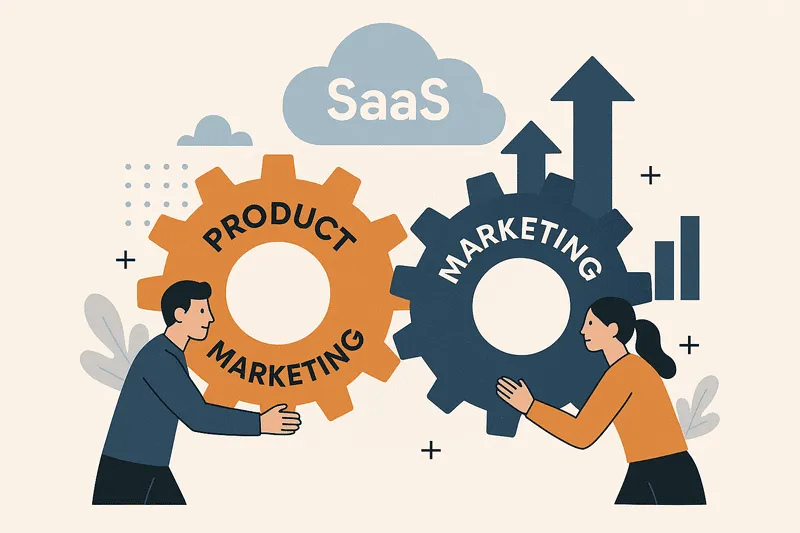
The reality is that SaaS growth requires two distinct yet interdependent engines: Product Marketing and Traditional Marketing. When both engines are optimized and synchronized, they create a compounding effect that transforms sporadic growth into predictable, scalable revenue expansion.
This article establishes a clear framework for understanding these two critical functions, diagnosing which engine might be underperforming in your organization, and creating the alignment necessary for breakthrough growth.
The Growth Engine Framework: Why Two is Better Than One
Traditional growth thinking focuses on a single funnel: attract → convert → retain. But this oversimplifies how SaaS buyers actually make decisions and how sustainable growth compounds over time.
In reality, SaaS growth operates more like a twin-engine aircraft:
- Marketing Engine: Provides the thrust—driving awareness, generating demand, and creating market presence
- Product Marketing Engine: Provides the navigation—ensuring market fit, crafting positioning, and optimizing conversion
When both engines work in harmony, you achieve:
- Lift: Increased visibility and reach in your target market
- Direction: Clear, compelling messaging that resonates with your ideal customers
- Efficiency: Higher conversion rates and shorter sales cycles
- Sustainability: Stronger retention and expansion revenue
When only one engine is working, you experience:
- Stalled growth: High activity but limited results
- Resource waste: Marketing spend without corresponding revenue impact
- Competitive vulnerability: Inability to differentiate or defend market position
- Team frustration: Misaligned goals and unclear accountability
Engine One: Product Marketing Defined
Product Marketing serves as the strategic bridge between your product's capabilities and your market's needs. It's the function responsible for ensuring that what you build actually solves problems your customers are willing to pay for.
Core Product Marketing Responsibilities
Market Intelligence & Strategy
- Conduct deep customer research and competitive analysis
- Define ideal customer profiles (ICPs) and buyer personas
- Identify market opportunities and positioning gaps
- Validate product-market fit hypotheses
Positioning & Messaging
- Craft compelling value propositions
- Develop messaging frameworks and key narratives
- Create positioning that differentiates from competitors
- Ensure message-market fit across all touchpoints
Go-to-Market Execution
- Design launch strategies for new products and features
- Develop pricing and packaging strategies
- Create sales enablement materials and training
- Build customer success and adoption programs
Revenue Optimization
- Analyze conversion funnel performance
- Optimize trial-to-paid conversion rates
- Drive expansion and upsell strategies
- Measure and improve product adoption metrics
What Product Marketing Owns
| Area | Responsibility | Key Metrics |
|---|---|---|
| Market Fit | Ensuring product solves real customer problems | Product-market fit score, customer satisfaction |
| Buyer Journey | Mapping and optimizing the path to purchase | Conversion rates, sales cycle length |
| Competitive Position | Maintaining differentiation and win rates | Competitive win rate, market share |
| Revenue Growth | Driving expansion and retention | Net revenue retention, expansion rate |
Engine Two: Traditional Marketing Defined
Traditional Marketing (or Growth Marketing) focuses on creating market presence, generating demand, and building the brand equity necessary for sustainable growth. It's the function responsible for ensuring your target market knows you exist and understands why they should care.
Core Marketing Responsibilities
Demand Generation
- Execute multi-channel acquisition campaigns
- Optimize paid advertising across platforms
- Develop content marketing strategies
- Build and nurture lead generation programs
Brand Building
- Establish brand identity and voice
- Create thought leadership content
- Manage public relations and communications
- Build community and customer advocacy
Growth Optimization
- Analyze and optimize marketing funnels
- Test and iterate on campaign performance
- Implement marketing automation and nurturing
- Scale high-performing acquisition channels
Market Presence
- Increase brand awareness and recall
- Drive website traffic and engagement
- Manage social media and digital presence
- Execute event marketing and partnerships
What Traditional Marketing Owns
| Area | Responsibility | Key Metrics |
|---|---|---|
| Market Presence | Building awareness and brand recognition | Brand awareness, share of voice |
| Demand Generation | Creating and capturing market demand | Lead volume, cost per acquisition |
| Growth Velocity | Accelerating customer acquisition | Growth rate, pipeline velocity |
| Channel Performance | Optimizing marketing investment ROI | Channel ROI, marketing attribution |
The Critical Differences: A Side-by-Side Analysis
Understanding the distinct but complementary nature of these functions is essential for proper resource allocation and performance measurement.
| Dimension | Product Marketing | Traditional Marketing |
|---|---|---|
| Primary Focus | Market fit and conversion | Market presence and acquisition |
| Target Audience | Qualified prospects and customers | Broad market and target segments |
| Success Metrics | Conversion rates, retention, expansion | Traffic, leads, brand awareness |
| Time Horizon | Medium to long-term positioning | Short to medium-term campaigns |
| Content Type | Product-focused, solution-oriented | Brand-focused, problem-oriented |
| Channel Strategy | Sales enablement, customer success | Paid media, content, social |
| Budget Allocation | Research, tools, sales support | Advertising, content, events |
| Skill Set | Analytical, strategic, customer-centric | Creative, performance-driven, channel-focused |
The Complementary Nature
Rather than competing functions, Product Marketing and Traditional Marketing create a multiplier effect:
- Marketing generates interest and drives traffic
- Product Marketing converts interest into understanding and purchase intent
- Marketing amplifies product marketing messages to reach more prospects
- Product Marketing provides market feedback to refine marketing targeting
- Marketing creates the demand that product marketing converts
- Product Marketing ensures marketing efforts attract the right audience
Diagnosing Engine Performance: Warning Signs
Most SaaS companies can quickly identify which engine is underperforming by examining specific symptoms and metrics.
Signs of Weak Product Marketing
Conversion Issues
- High lead volume but poor lead-to-opportunity conversion
- Long sales cycles with frequent objections
- Low trial-to-paid conversion rates
- High customer acquisition cost relative to competitors
Positioning Problems
- Sales team creates their own messaging and materials
- Customers express confusion about your value proposition
- High competitive loss rate in sales situations
- Generic or commodity positioning in the market
Market Disconnection
- Product launches that fail to gain traction
- Features that don't drive adoption or retention
- Pricing strategies that don't resonate with customers
- Lack of clear differentiation from alternatives
Signs of Weak Traditional Marketing
Visibility Challenges
- Low brand awareness in target market
- Minimal organic traffic and content engagement
- Poor performance across paid advertising channels
- Limited social media presence and engagement
Demand Generation Issues
- Insufficient lead volume to support growth goals
- High cost per acquisition across all channels
- Inability to scale marketing programs effectively
- Low marketing attribution to pipeline and revenue
Brand Positioning Gaps
- Lack of thought leadership in your industry
- Minimal earned media coverage or industry recognition
- Poor brand recall among target prospects
- Weak community or customer advocacy programs
The Alignment Framework: Making Both Engines Work Together
Creating alignment between Product Marketing and Traditional Marketing requires intentional strategy, clear processes, and shared accountability.
1. Establish Shared Foundations
Unified Customer Understanding
- Collaborate on ICP development and persona research
- Share customer feedback and market intelligence
- Align on buyer journey mapping and touchpoint optimization
- Create shared customer success metrics and goals
Integrated Messaging Framework
- Product Marketing defines core value propositions
- Traditional Marketing adapts messages for different channels and audiences
- Both functions validate messaging through testing and customer feedback
- Regular review and refinement based on market response
2. Create Joint Planning Processes
Quarterly GTM Planning
- Align on growth goals and target market priorities
- Coordinate product launches with marketing campaigns
- Plan integrated content calendars and campaign themes
- Establish shared KPIs and success metrics
Launch Coordination
- Product Marketing leads positioning and enablement
- Traditional Marketing handles amplification and demand generation
- Joint post-launch analysis and optimization
- Shared accountability for launch success metrics
3. Implement Feedback Loops
Regular Communication Rhythms
- Weekly sync meetings between PMM and marketing leads
- Monthly performance reviews with shared metrics analysis
- Quarterly strategy alignment sessions
- Annual planning processes with integrated roadmaps
Data Sharing and Analysis
- Shared dashboard with key performance indicators
- Regular customer feedback sessions with both teams
- Joint analysis of funnel performance and optimization opportunities
- Coordinated A/B testing of messaging and positioning
4. Define Clear Ownership and Accountability
| Function | Product Marketing Owns | Traditional Marketing Owns | Shared Ownership |
|---|---|---|---|
| Strategy | Positioning, messaging | Channel strategy, brand | Customer segmentation |
| Content | Sales enablement, product | Thought leadership, awareness | Customer stories, case studies |
| Campaigns | Launch messaging, GTM | Campaign execution, optimization | Launch coordination |
| Metrics | Conversion, retention | Acquisition, awareness | Revenue attribution |
Case Study: When Both Engines Fire in Sync
Company: Mid-market project management SaaS Challenge: Stagnant growth despite strong product and active marketing Problem: Misaligned messaging and unclear positioning
The Diagnosis
Marketing Engine Status: Strong
- High website traffic and content engagement
- Effective paid advertising with good lead volume
- Active social media presence and thought leadership
Product Marketing Engine Status: Weak
- Generic positioning ("project management for teams")
- No clear differentiation from competitors
- Poor trial-to-paid conversion (8% vs. industry average of 15%)
- Long sales cycles with frequent competitive losses
The Alignment Strategy
Phase 1: Foundation Building (Month 1-2)
- Conducted deep customer research to identify unique value drivers
- Redefined ICP based on customers with highest retention and expansion
- Developed new positioning focused on "project visibility for distributed teams"
- Created unified messaging framework with supporting evidence
Phase 2: Integration (Month 3-4)
- Redesigned marketing campaigns around new positioning
- Updated all sales materials and enablement resources
- Launched content series showcasing differentiated value
- Implemented shared metrics dashboard and regular sync processes
Phase 3: Optimization (Month 5-6)
- A/B tested new messaging across marketing channels
- Refined positioning based on market response and conversion data
- Scaled successful marketing tactics with optimized messaging
- Established ongoing feedback loops and performance reviews
The Results (6-month period)
| Metric | Before Alignment | After Alignment | Improvement |
|---|---|---|---|
| Trial-to-Paid Conversion | 8% | 18% | +125% |
| Sales Cycle Length | 89 days | 67 days | -25% |
| Competitive Win Rate | 34% | 52% | +53% |
| Cost per Acquisition | $1,247 | $892 | -28% |
| Monthly Recurring Revenue | $340K | $485K | +43% |
Key Success Factors
- Leadership Commitment: CEO made alignment a strategic priority
- Shared Metrics: Both teams measured on revenue impact, not just function-specific KPIs
- Regular Communication: Weekly syncs and monthly strategy reviews
- Customer Focus: Decisions driven by customer research and feedback
- Iterative Approach: Continuous testing and refinement based on results
Implementation Roadmap: 90-Day Alignment Plan
Days 1-30: Assessment and Foundation
Week 1-2: Current State Analysis
- Audit existing product marketing and marketing functions
- Identify gaps and overlaps in responsibilities
- Analyze current performance metrics and attribution
- Survey customers about positioning and messaging effectiveness
Week 3-4: Strategic Alignment
- Define shared goals and success metrics
- Create unified ICP and buyer persona documentation
- Establish communication rhythms and processes
- Plan resource allocation and team structure changes
Days 31-60: Integration and Testing
Week 5-6: Messaging Integration
- Develop unified messaging framework
- Update marketing materials and sales enablement
- Launch A/B tests of new positioning across channels
- Train sales and customer success teams on new messaging
Week 7-8: Campaign Coordination
- Plan integrated marketing campaigns with PMM input
- Create shared content calendar and launch timeline
- Implement shared metrics dashboard and reporting
- Execute first coordinated campaign launch
Days 61-90: Optimization and Scale
Week 9-10: Performance Analysis
- Analyze results from initial alignment efforts
- Identify what's working and what needs adjustment
- Optimize messaging and positioning based on data
- Scale successful tactics and eliminate ineffective ones
Week 11-12: Process Refinement
- Establish ongoing communication and feedback processes
- Create templates and frameworks for future coordination
- Plan next quarter's integrated marketing strategy
- Document learnings and best practices for continuous improvement
Measuring Success: KPIs for Aligned Growth Engines
Success in aligning Product Marketing and Traditional Marketing requires metrics that capture both individual function performance and collaborative impact.
Individual Function Metrics
Product Marketing KPIs
- Message-market fit score (customer survey-based)
- Sales-qualified lead to opportunity conversion rate
- Sales cycle length and velocity
- Competitive win rate and deal size
- Product adoption and feature utilization rates
- Net Promoter Score and customer satisfaction
Traditional Marketing KPIs
- Marketing-qualified lead volume and quality
- Cost per acquisition by channel
- Brand awareness and consideration metrics
- Website traffic and engagement rates
- Content performance and thought leadership metrics
- Marketing attribution to pipeline and revenue
Shared Success Metrics
Revenue Impact
- Total pipeline generation and velocity
- Marketing and PMM contribution to closed-won revenue
- Customer lifetime value and payback periods
- Net revenue retention and expansion rates
Market Position
- Share of voice in target market
- Competitive differentiation scores
- Market penetration and growth rates
- Customer advocacy and referral rates
Operational Efficiency
- Time from lead to opportunity conversion
- Marketing spend efficiency and ROI
- Sales enablement effectiveness scores
- Cross-functional collaboration satisfaction
Common Pitfalls and How to Avoid Them
Pitfall 1: Treating One Function as Support for the Other
The Problem: Viewing Product Marketing as sales support or Traditional Marketing as just lead generation The Solution: Establish both functions as strategic, revenue-critical roles with distinct but equal importance
Pitfall 2: Competing Rather Than Collaborating
The Problem: Functions optimizing for their own metrics without considering overall impact The Solution: Create shared KPIs and incentive structures that reward collaborative success
Pitfall 3: Inconsistent Communication and Processes
The Problem: Ad-hoc coordination that breaks down under pressure or during busy periods The Solution: Establish formal processes, regular meeting rhythms, and clear escalation paths
Pitfall 4: Neglecting Continuous Alignment
The Problem: Assuming initial alignment will persist without ongoing attention and refinement The Solution: Build feedback loops, regular reviews, and iterative improvement into standard processes
Pitfall 5: Under-investing in One Function
The Problem: Heavily resourcing one function while under-staffing or under-budgeting the other The Solution: Audit resource allocation and ensure both functions have adequate tools, talent, and budget
The Future of SaaS Growth: Integration by Design
As SaaS markets mature and competition intensifies, the companies that will thrive are those that integrate Product Marketing and Traditional Marketing from the ground up, rather than trying to align them after the fact.
Emerging Trends
Customer-Centric Organizations
- Shared customer research and insights functions
- Integrated customer journey optimization
- Cross-functional customer success teams
Data-Driven Alignment
- AI-powered attribution and performance analysis
- Predictive modeling for optimal resource allocation
- Real-time feedback loops and optimization
Agile GTM Operations
- Sprint-based campaign planning and execution
- Rapid testing and iteration cycles
- Cross-functional scrum teams for major initiatives
Building for the Future
Organizations that want to stay ahead should:
- Hire with Integration in Mind: Look for professionals with experience in both functions
- Invest in Shared Technology: Implement platforms that serve both functions effectively
- Design Integrated Processes: Build workflows that naturally encourage collaboration
- Measure Holistic Impact: Focus on business outcomes rather than function-specific vanity metrics
- Foster Cultural Alignment: Create shared values and practices that prioritize customer success
Frequently Asked Questions
Q: What if my company is too small to have separate Product Marketing and Traditional Marketing teams?
A: Even with limited resources, you can still apply this framework by ensuring both functions are covered, even if by the same person or shared across roles. The key is recognizing that both sets of activities are essential and allocating time/budget accordingly. Many successful startups have one person wearing both hats initially, but they're intentional about addressing both market fit and market presence.
Q: How do I know if I should hire for Product Marketing or Traditional Marketing first?
A: Look at your current constraint:
- If you have traffic/leads but poor conversion, hire Product Marketing first
- If you have good conversion but insufficient volume, hire Traditional Marketing first
- If you're unsure, audit your funnel metrics—typically, B2B SaaS companies need Product Marketing earlier than B2C companies
Q: What's the ideal ratio of Product Marketing to Traditional Marketing team members?
A: There's no universal ratio, but typical ranges are:
- Early stage (0-50 employees): 1:2 or 1:3 (PMM:Marketing)
- Growth stage (50-200 employees): 1:2 or 1:1
- Scale stage (200+ employees): 1:1 or 2:3
The ratio depends on your business model, sales complexity, and market maturity.
Q: How long does it typically take to see results from better alignment?
A: You should see early indicators within 30-60 days (improved messaging consistency, better lead quality), with material business impact typically visible within 90-120 days. Full optimization usually takes 6-12 months as you iterate and refine based on market feedback.
Q: What tools and technologies support better alignment between these functions?
A: Essential shared tools include:
- CRM platform for shared pipeline visibility (Salesforce, HubSpot)
- Analytics and attribution for performance measurement (Google Analytics, Bizible)
- Content management for coordinated messaging (Notion, Confluence)
- Communication platforms for regular coordination (Slack, Microsoft Teams)
- Project management for joint campaign planning (Asana, Monday.com)
Q: How do I handle conflicts between Product Marketing and Traditional Marketing priorities?
A: Establish clear escalation processes and shared success metrics:
- Start with data—what do customer research and performance metrics indicate?
- Test competing approaches with A/B experiments when possible
- Escalate to leadership with business case rather than functional arguments
- Use customer impact as the ultimate tie-breaker
- Build conflict resolution into your regular review processes
Q: Should Product Marketing report to Marketing, Product, or be independent?
A: The reporting structure matters less than ensuring:
- Both functions have equal strategic importance
- There's regular communication and coordination
- Shared accountability for revenue outcomes
- Clear ownership of respective responsibilities
Common structures include PMM reporting to CMO, Chief Product Officer, or directly to CEO/leadership team.
Q: How do I measure message-market fit objectively?
A: Use a combination of quantitative and qualitative metrics:
- Quantitative: Conversion rates, sales cycle length, competitive win rates, trial-to-paid conversion
- Qualitative: Customer interviews, sales feedback, market research surveys
- Composite score: Create a weighted index combining multiple indicators
- Benchmarking: Compare your metrics to industry standards and competitor performance
Q: What's the biggest mistake companies make when trying to align these functions?
A: The most common mistake is treating alignment as a one-time project rather than an ongoing process. Companies often:
- Set up initial processes but don't maintain them
- Focus on tools and structure while ignoring cultural alignment
- Measure individual function success rather than collaborative impact
- Underestimate the time and attention required for sustained coordination
Successful alignment requires continuous investment in communication, process refinement, and shared accountability.
TL;DR: Key Takeaways
The Core Premise: SaaS growth requires two engines—Product Marketing (ensuring market fit and conversion) and Traditional Marketing (driving awareness and demand). Most companies only optimize one, creating a fundamental growth constraint.
Critical Insights:
- Product Marketing owns market fit, positioning, and conversion optimization
- Traditional Marketing owns market presence, demand generation, and brand building
- When misaligned, you get high activity but poor results; when aligned, you get compounding growth
- Alignment requires shared goals, regular communication, and integrated processes
Action Steps:
- Audit your current function performance using the diagnostic framework
- Identify which engine is underperforming and invest accordingly
- Implement the 90-day alignment plan with shared metrics and processes
- Establish ongoing communication rhythms and feedback loops
- Measure success through both individual function KPIs and collaborative impact metrics
Bottom Line: Your SaaS growth isn't stalled—one of your engines just isn't firing yet. Fix the alignment, and watch your growth compound.
Get the monthly briefing
One high-signal edition a month on B2B growth, AI search, and agentic marketing. No noise, unsubscribe anytime.