I hear it all the time lately: "Why are you talking so much about AI? You're a marketer. Shouldn't you be focused on marketing? Ads, keywords, campaigns, the usual stuff?"
Here's my answer: How can I possibly talk about marketing today without talking about AI?
Look around. The ground beneath us has shifted completely.
The World Changed While We Were Optimizing Ad Copy
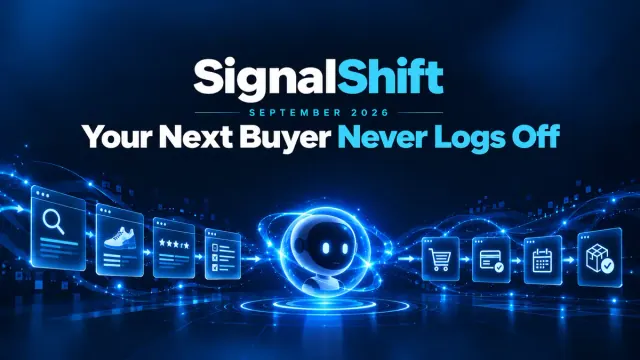
Browsers are being replaced by AI browsers. Traditional search is giving way to AI-powered tools. And perhaps most critically, the way people search has fundamentally transformed. They've moved from typing fragmented keywords to having full conversational exchanges with AI.
Think about that for a moment. Your customers aren't searching the way they used to. They're not punching in "best running shoes" anymore. They're asking, "I'm training for my first marathon and have flat feet. What shoes should I get, and how do I break them in without getting blisters?"
So tell me: what's the point of me standing here talking about mundane keywords, campaign structures, and budget allocations without acknowledging the seismic shift happening in customer behavior?
It would be like discussing the best practices for yellow pages advertising in 2015. Technically accurate, completely irrelevant.
This Isn't the Marketing I Started In (Thank God)
I came up in the era of keyword stuffing and obsessing over keyword rankings. Remember those days? Stuffing "best cheap hotels in New York" seventeen times into a meta description and calling it strategy?
Those tactics worked then. They'd be laughable now.
We're living in an entirely different world, and honestly? I'm thrilled about it.
I feel genuinely fortunate to be witnessing marketing evolve from boring, repetitive questions about ad copy and creative templates to something far more fascinating: understanding actual human behavior and reaching people in fundamentally new ways through technology.
The Accidental Advantage of Being a Technical Marketer
Here's something that's worked massively in my favor: I came into marketing with a computer science and engineering background, with software engineering experience under my belt. Back then, that was weird. Almost alien.
Most marketers came from business management programs. They spoke fluently about brand positioning and market segmentation. I spoke in APIs and algorithms. We were speaking different languages.
But you know what? Understanding the technology gave me an unfair advantage.
While others were trying to figure out what "machine learning" meant or why it mattered, I already understood how these systems think, how they learn, how they can be influenced. I could see the patterns forming before they became obvious.
Now? Everyone's scrambling to understand the technology. Everyone wants to discuss engineering mindsets and technical implementation alongside business strategy because that's what it takes to run effective campaigns anymore.
AI Isn't Replacing Marketing. It's Becoming Marketing
Here's what people miss when they ask why I talk so much about AI:
AI isn't a tool we're using for marketing. AI is the infrastructure of marketing itself.
Every campaign you run today has AI deeply embedded in it. Performance Max is AI deciding where and when to show your ads. Demand Gen is AI identifying your best potential customers. Your ad copy is being tested and optimized by AI in real-time. Your bids are being adjusted by AI thousands of times per day. Your audience targeting is being refined by AI based on signals you can't even see.
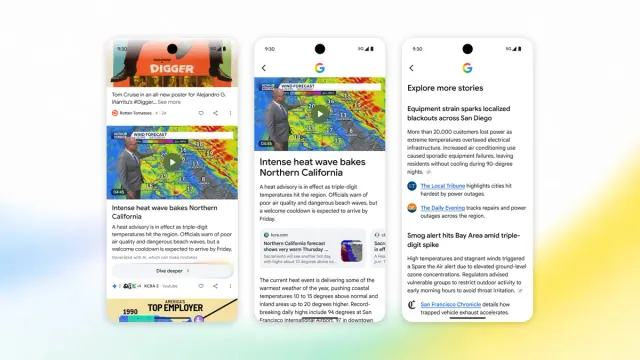
Google's AI Mode is now showing ads inside conversational search results. Your customers are having dialogues with AI, and your ads need to feel like natural parts of that conversation, not interruptions.
When I talk about AI, I'm not getting distracted from marketing. I'm talking about the very foundation of how marketing works now.
The Marketers Who Will Thrive (And Those Who Won't)
I've watched this industry long enough to recognize the pattern.
The marketers who resist understanding the technology, who insist they "just need to focus on the marketing fundamentals," they're the ones who get left behind. They're the ones still optimizing for tactics that stopped working years ago.
The marketers who thrive? They're curious. They ask questions like:
- How does this AI system make decisions?
- What data is it using to learn?
- How can I structure my campaigns to feed it better signals?
- What does "conversational search" mean for my keyword strategy?
They embrace what I call Marketing Engineering. They treat marketing as a continuous, data-driven system, not a series of episodic campaigns. They understand that data is raw material, campaigns need modular architecture, and everything requires agile iteration.
Why This Matters Right Now
Here's the uncomfortable truth: conversational search is reducing the visibility of traditional search ads. Ads integrated into AI Mode could carry premium pricing that raises costs per click.
The playing field is shifting. The old approaches are losing effectiveness. If you're not adapting to how your customers actually behave and search today, you're essentially invisible.
When ad placements decrease and competition rises, bids will keep getting more expensive. This reduces opportunities, especially for small businesses.
My Commitment to You
Yes, I'm going to keep talking about AI. Not because it's trendy or because I'm trying to be a futurist. I do it because I cannot give you honest, effective marketing guidance in 2025 without talking about the technology that powers every single thing we do.
I'm excited about this evolution. I'm energized by the complexity and the challenge. I'm grateful that my technical background positioned me to help translate this new world for marketers who are feeling overwhelmed.
This isn't about abandoning marketing fundamentals. The fundamentals themselves have changed.
The question isn't whether AI belongs in marketing conversations.
The question is: how can you possibly have a marketing conversation without it?
Get the monthly briefing
One high-signal edition a month on B2B growth, AI search, and agentic marketing. No noise, unsubscribe anytime.