Look, I've been beating this drum for a while now. AI isn't coming for search—it's already here, changing how people find information, make decisions, and discover brands. If you've read my earlier piece on why I can't shut up about AI in marketing, you know I've been tracking this shift closely.
Now we've got numbers that prove what many of us have been feeling.
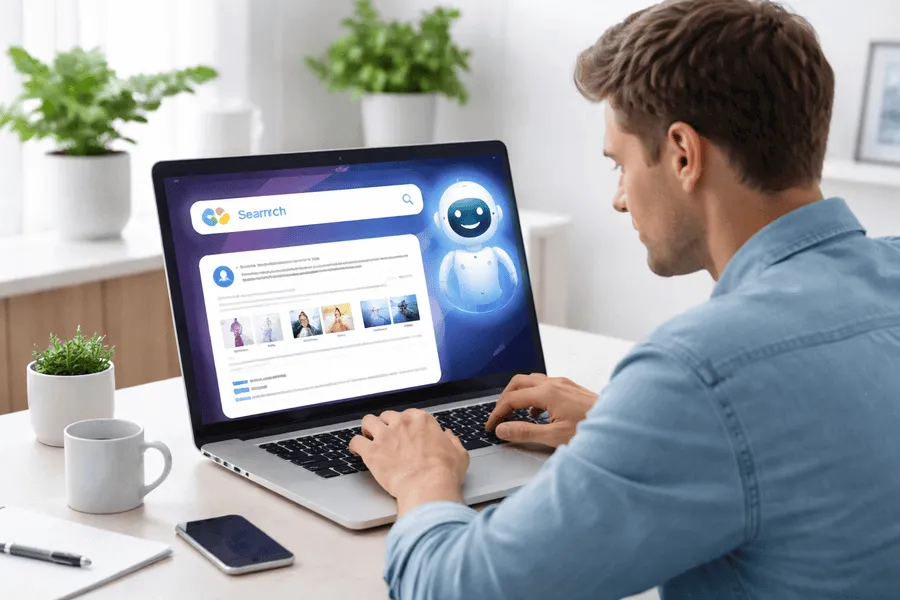
The 2026 AI and Search Behavior Study from Eight Oh Two just dropped, and here's the headline: 37% of consumers now start their search journey with AI tools, not traditional search engines.
That's not a small pilot group. That's more than one in three people choosing a fundamentally different path to answers.
The Data Behind the Shift
This isn't some futurist prediction or vendor research designed to sell you something. Eight Oh Two surveyed 500 active AI users and asked them directly about their behavior—what frustrates them, what they trust, where they start, and how they decide.
Real behavior. Real patterns. Real implications.
And those implications matter more than any algorithm update Google could push.
Why People Are Walking Away From Traditional Search
The study breaks down exactly why people are reaching for ChatGPT or Perplexity before they open Google. The reasons aren't surprising if you've used search lately:
- 40% are tired of clicking through endless links
- 37% are drowning in ads and sponsored results
- 33% can't get a straight answer anymore
- 28% keep hitting the same recycled content
This is cognitive overload dressed up as choice.
Traditional search makes you work for the answer. You query, scan results, click, read, back button, click again, compare, synthesize. It's research, not retrieval.
AI just gives you the answer.
I talked about this pattern in my piece on long-form intent queries killing keywords. People stopped searching like robots ("best CRM software") and started asking like humans ("what CRM should I use for a team of 12 that integrates with HubSpot"). They wanted answers, not links.
AI finally delivers on that promise.
Trust Is Growing, Even With Built-In Skepticism
Here's where it gets interesting. The trust numbers:
- 60% say AI gives better, clearer answers than search
- Only 6% think AI is worse
- 80% believe AI provides unbiased information
- But 85% still verify answers somewhere else
That last stat is the key. People aren't blindly trusting AI. They're using it differently.
AI builds understanding. Search confirms details.
This is the hybrid journey I've been describing—where AI handles the first pass and search becomes the fact-checker. It's not either/or. It's sequential.
Search Didn't Die, It Just Got Demoted
Traditional search still wins for specific use cases:
- Pricing and product reviews
- Breaking news and current events
- Medical questions
- Images and videos
This tracks with what I laid out in my GEO framework for ranking on LLMs. Search remains essential for verification, for transactional queries, for anything time-sensitive or visual.
But the starting point has moved.
Search no longer owns discovery. It owns confirmation.
Your Brand Gets Discovered Inside AI Responses Now
This is the part that should make every marketer sit up.
47% of users say AI influences which brands they trust.
Read that again.
First impressions are now forming inside AI-generated summaries, not on your website, not in your carefully crafted landing pages, not even in search results.
If your brand is hard for AI to interpret, describe, or differentiate, you might not make it into the consideration set at all.
I covered this in my guide on optimizing for AI search—how clarity, structure, and semantic signals make you easy for AI to include. Your brand needs to be describable. That's not a nice-to-have anymore. That's a visibility requirement.
AI Is Already Driving Purchase Decisions
This moved from research mode to buying mode faster than I expected:
- 47% have used AI to help make a purchase decision
- 57% have used it to find the best prices
- 54% have used it to compare products
- 48% have used AI to summarize reviews
AI is filtering choices before anyone lands on your site. By the time they arrive, they're already halfway down the funnel.
In my complete guide to AI optimization, I showed how brands getting this right see a 4.4x conversion lift. Not because traffic increases, but because visitors arrive warmer, more informed, more ready to act.
That's the real leverage.
The Traffic Paradox You're Probably Already Feeling
Here's the tricky part that's hard to spot in your analytics.
Your pages still rank. Your Search Console looks fine. But traffic growth just... stalls.
Why? Because AI already consumed your content, extracted the value, and served the answer. The user got what they needed without clicking.
You're not being penalized. You're being read and summarized out of the funnel.
This is the pattern a lot of teams are feeling but can't quite name. Discovery moved upstream from your site, and ranking alone doesn't guarantee visibility anymore.
What Users Expect Next
The study also asked about the future:
- 63% plan to use AI more
- 59% think AI will become their primary way of finding information
- Nearly 50% expect AI to handle complete tasks end-to-end
They're not asking to go back to traditional search. They're asking for AI that works better—more accurate, better sourced, more transparent, more personalized.
The trajectory is clear.
What This Actually Means for Your Marketing
I've written a lot about GEO, AEO, AISO, and AI visibility frameworks. This isn't another one of those pieces.
This is about accepting a simple reality: discovery no longer starts where you control the experience.
It starts where understanding happens first.
That means your brand needs visibility across three stages:
- Where understanding is formed (inside AI responses)
- Where trust is built (through consistent, clear positioning)
- Where confirmation happens (traditional search, reviews, your site)
If your message isn't consistent across all three, credibility breaks down.
Rankings, traffic, conversions, loyalty—all of it now depends on how well AI can interpret and represent your brand before anyone clicks.
The Bottom Line
This Eight Oh Two report isn't forecasting the future. It's documenting the present.
When 37% of people start with AI, traditional search becomes the backup plan by default.
SEO isn't dead. But SEO alone isn't enough.
The real question isn't how well you rank anymore. It's whether AI understands your brand well enough to include you in the first place.
That's where the game is actually being played now.
TL;DR
37% of consumers now start their search with AI instead of Google. They're frustrated with traditional search (too many clicks, ads, and low-quality results), and they trust AI to give clearer answers—though they still verify facts elsewhere. AI is influencing brand discovery and purchase decisions before users ever visit a website. This means ranking well isn't enough anymore. Your brand needs to be easy for AI to understand, describe, and include in its responses. Discovery moved upstream from your website to inside AI answers. If you're not optimized for that, you're invisible where it matters most.
FAQs
Does this mean traditional search is dead?
No. Traditional search is still essential for verification, pricing, news, images, and transactional queries. But it no longer owns the first touchpoint. AI handles discovery; search handles confirmation.
Why do 85% of people still verify AI answers if they trust them?
Trust and verification aren't opposites here. Users trust AI to give them understanding faster than search, but they're pragmatic enough to confirm facts before making decisions. It's a hybrid approach, not blind faith.
What does "AI influences which brands they trust" actually mean?
It means people are forming first impressions of brands inside AI-generated summaries, not on your website or in search results. If AI describes your competitor more clearly than you, they get the mental advantage before anyone clicks.
How do I know if this is affecting my traffic?
You might see rankings stay stable while organic traffic growth slows or plateaus. That's often a sign that AI is answering queries directly without sending clicks through. Your content is being read—just not by humans on your site.
What's the single most important thing to do right now?
Make your brand easy to describe. Clear positioning, structured content, consistent messaging across all sources. If AI can't quickly understand what you do and why it matters, you won't show up in answers that influence decisions.
Get the monthly briefing
One high-signal edition a month on B2B growth, AI search, and agentic marketing. No noise, unsubscribe anytime.