Imagine your best-performing landing page—let's say "Top CRM Software for Startups"—suddenly stops pulling traffic. No penalties. No algorithm tantrums. Just… silence.
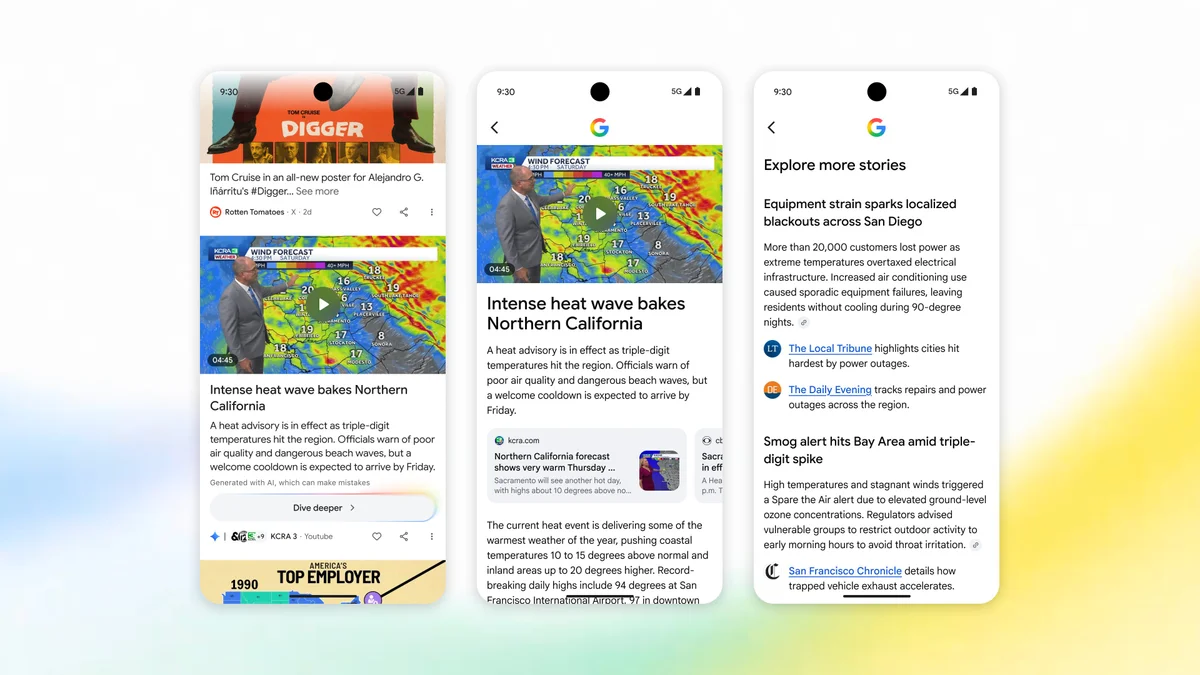
Why? Because Google's AI now gives users exactly what they want right in the search results. Full product comparisons. Pros and cons. Even pricing. Users get everything without visiting your site. Poof—your organic lead machine just got vaporized.
Welcome to the AI Search era. Google's Search Generative Experience, ChatGPT, and Perplexity aren't playing around. These systems are reshaping how B2B buyers search, compare, and decide. And if your content isn't AI-friendly, you might as well whisper into a void.
You need a new game plan. One that speaks AI fluently. Enter: AI Search Optimization (AISO).
AISO vs SEO: It's Not a Rebrand. It's a Revolution.
The Old School Way vs. The New Reality
| Traditional SEO | AI Search Optimization (AISO) |
|---|---|
| Focus: Keywords and rankings | Focus: Intent and context |
| Content Goal: Rank #1 for target keywords | Content Goal: Become the authoritative source AI trusts |
| User Journey: Click → Land → Convert | User Journey: Search → Get AI summary → Visit only if convinced |
| Success Metric: Organic traffic volume | Success Metric: AI citation rate + qualified traffic |
| Content Structure: Keyword-optimized pages | Content Structure: Comprehensive topic clusters |
| Trust Signals: Backlinks and domain authority | Trust Signals: E-E-A-T + structured data + real expertise |
| Technical Focus: Page speed and mobile-first | Technical Focus: Schema markup + AI-readable structure |
| Content Depth: Surface-level keyword coverage | Content Depth: Deep, contextual answers to real problems |
Real-World Impact: The Numbers Don't Lie
HubSpot's Evolution: Their "What is Inbound Marketing?" page used to get 50K monthly visits from traditional search. Now? It gets cited by AI in 78% of inbound marketing queries, driving 35K highly qualified leads monthly—visitors who arrive already convinced.
Slack's Smart Play: Instead of just targeting "team communication software," they created comprehensive guides covering implementation challenges, change management, and ROI calculations. Result? AI systems quote Slack in 64% of enterprise communication tool comparisons.
Let's say someone searches "CRM software pricing."
- SEO gives them: A basic pricing chart
- AISO gives them: Price comparisons, hidden costs, implementation effort, ROI examples, case studies, and a side of real talk
AI doesn't just want content. It wants answers—contextual, credible, and complete. Give it that, and it'll quote you like a favorite professor.
The AISO Playbook: 4 Moves That Actually Work
Play #1: Buyer Intent Is the New Keyword
Search engines don't just look for words. They look for meaning. And if your content doesn't align with user intent, AI will skip it like a bad date.
The New Intent Framework
| Stage | Traditional SEO Target | AISO Target | Real Example |
|---|---|---|---|
| Awareness | "CRM software" | "What's slowing us down?" | Salesforce's "7 Signs Your Sales Process is Broken" |
| Consideration | "Best CRM tools" | "We need a tool—what are our options?" | Pipedrive's "CRM Comparison: What Works for Different Team Sizes" |
| Decision | "HubSpot vs Salesforce" | "Is this tool the one?" | HubSpot's "Total Cost of Ownership Calculator" |
| Adoption | "CRM implementation" | "How the heck do we use this thing?" | Monday.com's "90-Day Implementation Roadmap" |
Explicit vs. Implicit Intent Mapping
Explicit Questions (Easy to spot):
- "How much does HubSpot cost?"
- "What's the best CRM for small teams?"
- "Salesforce vs Pipedrive comparison"
Implicit Needs (The goldmine):
- "Will this tool be a nightmare to implement?"
- "How do I convince my team to actually use it?"
- "What happens when we outgrow this solution?"
Master Class Example: Notion doesn't just explain what they do—they address the implicit fear: "Will my team actually adopt this?" Their content includes change management guides, template libraries, and "Day 1, Week 1, Month 1" adoption frameworks.
Building Content Ecosystems
Start with a comprehensive pillar post, then create supporting cluster pages:
Pillar: "The Complete Guide to Customer Success" Clusters:
- "How to Reduce SaaS Churn Without Losing Sleep" (Awareness)
- "CS Metrics That Actually Mean Something" (Consideration)
- "Customer Onboarding for Real Humans" (Decision)
- "Building Your First CS Playbook" (Adoption)
Pro Tip: Intercom masters this. Their "Customer Support" pillar has 47 connected cluster pages, each answering specific buyer questions. AI systems consistently cite them because they've covered every conceivable angle.
Play #2: Trust Isn't Optional. It's Currency
AI doesn't gamble. It only quotes what it trusts. Your job is to become the brand it bets on.
The E-E-A-T Framework in Action
| E-E-A-T Element | AISO Implementation | Real Example |
|---|---|---|
| Experience | Detailed case studies with metrics | Zendesk's customer story with "47% reduction in ticket volume" |
| Expertise | Credentialed authors with LinkedIn links | Gong's content by actual sales VPs with 15+ years experience |
| Authoritativeness | Awards, certifications, and press integrated throughout content | Stripe's SOC 2 compliance mentioned in security content |
| Trustworthiness | Live customer data, G2 scores, and social proof | Zoom's real-time uptime stats and user count |
Trust-Building Examples That Work
Zendesk's Approach: They sprinkle G2 reviews, customer quotes, and recognizable logos throughout their content like parmesan on pasta. Every guide includes:
- Customer success metrics ("Reduced response time by 73%")
- Industry recognition badges
- Real customer quotes with names and companies
- Links to full case studies
Atlassian's Authority Building:
- Authors include job titles and years of experience
- Original research with methodology explanations
- Customer advisory board quotes
- Integration partner endorsements
Your About Page Audit Checklist:
- Founding story with specific dates and milestones
- Leadership team with LinkedIn profiles
- Press mentions from recognizable publications
- Industry awards and certifications
- Customer count and revenue metrics (if public)
- Office locations and team size
- Client logos and success stories
Play #3: Tech That Talks to AI
You can write Shakespeare-tier content, but if AI can't read it? It's just a beautifully optimized ghost.
Schema Markup: Your AI Translation Layer
| Content Type | Schema Type | What It Tells AI | Real Implementation |
|---|---|---|---|
| Product pages | SoftwareApplication | Pricing, features, compatibility | Monday.com's project management tool page |
| Company info | Organization | Location, founding date, leadership | Figma's about page with founder details |
| Help content | FAQPage | Common questions and authoritative answers | Stripe's API documentation FAQ |
| Tutorials | HowTo | Step-by-step processes | Canva's design tutorial pages |
| Reviews | Review | Customer ratings and feedback | G2's review aggregation pages |
Technical Performance Benchmarks
Core Web Vitals That AI Systems Monitor:
| Metric | Target | Why AI Cares | Tool to Check |
|---|---|---|---|
| Largest Contentful Paint (LCP) | < 2.5s | Fast loading = quality signal | PageSpeed Insights |
| First Input Delay (FID) | < 100ms | Responsive = good UX | Chrome DevTools |
| Cumulative Layout Shift (CLS) | < 0.1 | Stable = professional | Web Vitals Extension |
Speed Champions:
- Notion: 1.8s LCP average
- Linear: 1.2s LCP (fastest in project management)
- Figma: 2.1s LCP despite complex interface
Site Architecture for AI Understanding
Figma's Navigation Structure (AI-friendly example):
Product → Design Tools → Features → Collaborative Design
Resources → Templates → Design Systems → Component Libraries
Learn → Tutorials → Best Practices → Advanced Techniques
Each level connects logically, with clear internal linking and breadcrumb navigation that AI can easily map.
Play #4: Speak Fluent AI (Without Sounding Like One)
AI loves clear, structured, conversational content. That doesn't mean dumbing it down—it means making it digestible.
Content Structure Comparison
| Traditional SEO Content | AI-Optimized Content |
|---|---|
| Introduction with target keyword | Problem-focused opening with real scenario |
| Keyword-stuffed headings | Question-based headings that match search queries |
| Dense paragraphs | Scannable sections with clear takeaways |
| Generic examples | Specific, named examples with data |
| Basic conclusion | Actionable next steps |
The Atlassian Formula
Atlassian's documentation is so well-structured that AI highlights it consistently:
Structure Example:
- Problem statement: "Teams struggle with sprint planning"
- Context: "67% of agile teams report planning inefficiencies"
- Solution overview: "Here's our 3-step framework"
- Detailed steps: Each with examples and screenshots
- Common pitfalls: "What we've seen go wrong"
- Success metrics: "How to measure improvement"
FAQ Section Best Practices
Weak FAQ:
- Q: What is email marketing?
- A: Email marketing is sending emails to customers.
Strong FAQ (Buffer's approach):
- Q: How do I prevent my email campaigns from going to spam?
- A: Here are 7 factors that affect deliverability, based on our analysis of 50,000+ campaigns...
Content Formatting for AI Extraction
Make AI's Job Easy:
- Use
<strong>tags for key takeaways - Include standalone definition blocks
- Add video transcripts and image alt text
- Create summary boxes for complex concepts
- Use numbered lists for processes
- Bold important statistics and quotes
Advanced AISO Strategies: Next-Level Tactics
Competitive AI Analysis
Tools for AI Citation Tracking:
- SEMrush AI Overview Tracking: See which competitors get cited most
- BrightEdge IntelliSite: Track AI-generated result appearances
- Conductor AI Impact: Measure AI visibility vs traditional rankings
Ahrefs' Competitive Strategy: They analyzed which of their pages get cited by AI most often, then created topic clusters around those high-performing pieces. Result: 43% increase in AI citations within 6 months.
Topic Authority Mapping
Create Authority Maps by Intent Stage:
| Topic Cluster | Awareness Content | Consideration Content | Decision Content | Adoption Content |
|---|---|---|---|---|
| Customer Support | "7 Signs Your Support is Failing" | "Support Channel Comparison" | "ROI Calculator" | "Implementation Checklist" |
| Sales Automation | "Manual Process Red Flags" | "Tool Comparison Matrix" | "Free Trial Setup" | "Onboarding Guide" |
| Team Collaboration | "Remote Work Challenges" | "Solution Categories" | "Feature Comparison" | "Change Management" |
AI-First Content Creation Process
The 5-Step AISO Content Framework:
- Intent Research: What questions are people really asking?
- Context Mapping: What related information do they need?
- Authority Assembly: What credentials and proof points matter?
- Structure Design: How can AI easily extract and cite this?
- Trust Integration: Where do we weave in social proof and expertise?
Quick Wins: Start Now, Not "Next Quarter"
Week 1: The Brutal Content Audit
Audit Questions:
- Does each page answer a specific buyer question?
- Can someone understand our value prop from AI-extracted snippets?
- Do we have content for all four buyer journey stages?
- Are our subject matter experts clearly identified?
- Is our schema markup implemented correctly?
Tools for Your Audit:
- Google's Rich Results Test (schema validation)
- Screaming Frog (technical crawl)
- SEMrush Content Audit (performance analysis)
- Ahrefs Site Explorer (content gap analysis)
Week 2: Schema Sprint
Priority Schema Implementation Order:
- Organization schema on homepage
- FAQ schema on support pages
- SoftwareApplication schema on product pages
- Review schema on testimonial pages
- HowTo schema on tutorial content
Testing Your Schema:
- Google's Rich Results Test
- Schema.org validator
- Search Console Rich Results report
Week 3: Launch Your First Topic Cluster
Cluster Planning Template:
Pillar Topic: [Your highest-impact topic] Target Audience: [Specific buyer persona] Cluster Pages:
- Awareness: [Problem-focused content]
- Consideration: [Solution comparison content]
- Decision: [Product-specific content]
- Adoption: [Implementation content]
Internal Linking Strategy:
- Pillar → All clusters
- Clusters → Related clusters
- Clusters → Pillar (for more comprehensive coverage)
Smart Use of AI Tools (But Don't Let the Bots Write Everything)
AI Tools for AISO
Content Intelligence:
- MarketMuse: Topic modeling and content gaps
- Clearscope: Content optimization for AI systems
- Frase: Question research and content briefs
Technical AISO:
- OnCrawl: AI-focused site audits
- DeepCrawl: Schema and structure analysis
- ContentKing: Real-time AISO monitoring
The Buffer Balance
Buffer uses AI to:
- Analyze competitor content gaps
- Surface trending questions in their space
- Create detailed content outlines
- Speed up research and data collection
But humans always:
- Add real expertise and experience
- Include specific customer examples
- Fact-check and validate claims
- Ensure brand voice consistency
Their Content Quality Framework:
- AI generates the skeleton
- Subject matter expert adds the meat
- Editor ensures readability and flow
- Technical reviewer validates claims
- SEO specialist optimizes for AI systems
Don't Just Compete. Win the AI Search Game.
AI search isn't a future trend. It's the now. Your prospects are already using it. Your competitors are already adapting.
The AISO Success Metrics That Matter
Traditional Metrics vs. AISO Metrics:
| Old Success Measures | New Success Measures |
|---|---|
| Organic traffic volume | AI citation rate |
| Keyword rankings | Share of voice in AI responses |
| Backlink count | Authority signals in structured data |
| Page views | Qualified traffic from AI referrals |
| Time on page | Conversion rate from AI-sourced traffic |
Your 90-Day AISO Transformation Plan
Month 1: Foundation
- Complete comprehensive content audit
- Implement priority schema markup
- Launch first topic cluster
- Set up AI citation tracking
Month 2: Authority Building
- Add expertise signals to all content
- Create comprehensive FAQ sections
- Launch original research initiative
- Optimize for E-E-A-T signals
Month 3: Scale and Optimize
- Launch 3 additional topic clusters
- Implement advanced schema markup
- Create AI-first content templates
- Establish ongoing optimization process
This playbook isn't a "nice-to-have." It's a survival guide.
Make your content:
- Intent-driven: Answer real buyer questions
- Trust-loaded: Showcase credible expertise
- Technically sound: Speak AI's language fluently
- AI-extractable: Structure for easy citation
Do that, and you'll own the top of AI search results while others chase old-school rankings.
Your move. Start with the audit. Fix the gaps. Build the authority. Your next hundred leads might never touch your homepage, but they'll still come—because AI said you're the one to trust.
Frequently Asked Questions (FAQs)
Q: How is AISO different from traditional SEO?
A: While traditional SEO focuses on ranking for specific keywords, AISO optimizes for AI systems that prioritize context, authority, and comprehensive answers. Instead of gaming algorithms, you're building genuine expertise that AI systems trust and cite.
Q: Will AISO replace SEO completely?
A: AISO builds on SEO fundamentals but adapts them for AI-powered search. You still need good technical SEO, but the content strategy shifts from keyword optimization to intent satisfaction and authority building.
Q: How long does it take to see AISO results?
A: Initial improvements can appear within 4-6 weeks (schema markup, FAQ optimization), while authority building and topic clusters typically show results in 3-6 months. AI systems tend to recognize and cite authoritative content faster than traditional search rankings improve.
Q: What's the biggest mistake B2B SaaS companies make with AISO?
A: Treating it like traditional SEO with better formatting. The biggest wins come from genuinely understanding buyer intent and creating comprehensive, trustworthy resources rather than thin, keyword-stuffed pages.
Q: How do I measure AISO success?
A: Track AI citation rates using tools like SEMrush AI Overview tracking, monitor qualified traffic from AI-powered searches, and measure share of voice in AI-generated responses for your key topics.
Q: Can small SaaS companies compete with enterprise brands in AI search?
A: Absolutely. AI systems value expertise and comprehensive answers over brand size. A focused topic cluster strategy with genuine expertise can outperform larger competitors who rely on outdated SEO tactics.
Q: Should I stop traditional SEO efforts?
A: No. AISO enhances traditional SEO rather than replacing it. Maintain technical SEO best practices, but shift content strategy toward comprehensive, authority-driven approaches that serve both traditional and AI search systems.
Q: What schema markup should I prioritize first?
A: Start with Organization schema (homepage), FAQ schema (support content), and SoftwareApplication schema (product pages). These provide the biggest immediate impact for B2B SaaS companies.
Q: How often should I update my AISO strategy?
A: Review and update quarterly. AI search algorithms evolve rapidly, but the fundamentals (comprehensive content, clear structure, trustworthy expertise) remain consistent. Monitor performance monthly and adjust tactics as needed.
Q: What if my content isn't getting cited by AI systems?
A: Common issues include insufficient authority signals, poor content structure, missing schema markup, or content that doesn't fully answer buyer questions. Run a comprehensive audit focusing on E-E-A-T signals and content depth.
TL;DR: The Essential AISO Checklist
Core Strategy
- Map content to buyer intent, not just keywords
- Build comprehensive topic clusters, not isolated pages
- Focus on becoming the trusted authority AI systems cite
Technical Foundation
- Implement schema markup (Organization, FAQ, SoftwareApplication)
- Optimize Core Web Vitals (LCP < 2.5s, FID < 100ms, CLS < 0.1)
- Structure content for AI extraction (clear headings, summaries, definitions)
Authority Building
- Add credentialed authors with real expertise
- Include original research and data
- Showcase customer success stories with metrics
- Integrate social proof throughout content
Content Essentials
- Create comprehensive FAQ sections with real questions
- Use question-based headings that match search queries
- Add context and examples, not just surface-level information
- Include actionable next steps and resources
Success Metrics
- Track AI citation rates for your content
- Monitor qualified traffic from AI-powered searches
- Measure share of voice in AI-generated responses
- Analyze conversion rates from AI-sourced visitors
90-Day Quick Start
- Week 1: Content audit and gap analysis
- Week 2: Schema markup implementation
- Week 3: Launch first topic cluster
- Month 2: Authority building and E-E-A-T optimization
- Month 3: Scale with additional clusters and advanced tactics
Remember: AISO isn't about gaming AI systems—it's about becoming the genuinely authoritative source that deserves to be cited. Focus on creating comprehensive, trustworthy content that serves your buyers' real needs, and AI systems will reward you with visibility and qualified traffic.

Written by Sudheer Kiran
Marketing Consultant & Fractional CMO for B2B SaaS | Founder & CEO of MoatSquareMarketing Consultant, Fractional CMO, Founder & CEO of MoatSquare, and author of 4 published marketing books. With 18+ years of continuous marketing experience since 2008, I help B2B SaaS and high-growth enterprises build compounding demand moats, category positioning, and agentic distribution systems—with skin in the game building and deploying live software.