
Over the years, I’ve watched search evolve through countless shifts. Some were small, some were industry-changing and a few completely reshaped how customers discover and evaluate solutions. This new shift toward conversational search feels like one of the most defining changes yet.
What is happening now feels like another major turning point. Google has begun placing ads inside AI Mode responses. AI browsers are preparing to introduce monetised conversational layers. And users are shifting from short queries to full, natural sentences that explain context, goals and constraints.
This moment reminds me of the early mobile wave, when user behavior changed long before most businesses were ready. Today, conversational search is creating a similar gap. Except this time, the shift is faster and the impact is deeper.
Ignoring it now could become one of the biggest marketing missteps of the next few years.
Search Has Quietly Become a Conversation
In the past, most search behavior was transactional. A user typed a phrase. Google displayed a list. Brands competed for top-of-page visibility because that was the most predictable path to results.
Today’s search patterns look very different.
People now ask questions like:
- “Help me find the right CRM for my stage of growth and team size.”
- “What’s the best alternative to X if my budget is limited?”
- “Compare the top three tools for a small SaaS company that needs automation.”
These aren’t keywords. They are problems someone is actively trying to solve.
AI Mode reads that intent clearly. It responds with structured guidance that feels like an actual conversation. Inside that conversation, ads appear exactly where a recommendation would naturally fit.
From what I’ve observed, this changes everything. Visibility is no longer about ranking high. It is about being chosen as the right next step inside the conversation itself.
The New Ad Surface Is the Answer, Not the SERP
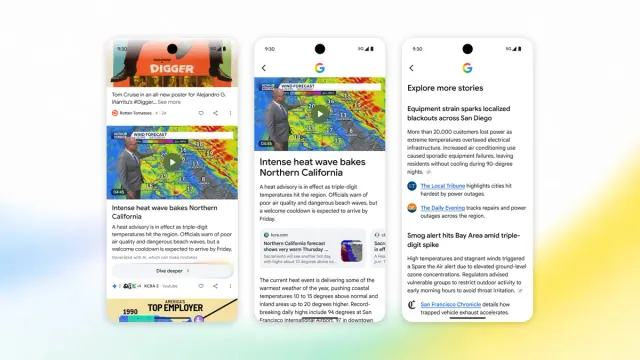
AI Mode now takes up the central part of the screen. The traditional SERP still exists, but user focus has shifted. Attention is moving from scanning lists to interacting with a conversational response.
Visibility now happens inside:
- The AI-generated explanation
- Suggested next actions
- Follow-up prompts inside the chat-like interface
This shift aligns with how users naturally make decisions. They want clarity, guidance and actionable direction, not long lists to sift through. When search behavior changed with mobile, brands who adjusted early saw gains that lasted for years. The same pattern is emerging now within conversational interfaces.
Ads Are Evolving Into Intent Conversations
Another interesting shift is emerging.
AI browsers will soon use ads to monetise their conversational layers.
AI search responses across platforms will integrate sponsored suggestions.
Chat interfaces will bring products and services into the dialogue instead of placing them at the margins.
The advertising ecosystem is evolving toward conversational ads. These ads appear within genuine moments of decision-making, not as interruptions. This aligns with what users actually want: relevance, not noise.
A few trends stand out:
Ads begin to feel like helpful recommendations.
They appear when the user is already thinking through a decision.
Placement depends on clarity and structure, not just bidding.
AI systems need clean signals to match intent to solutions.
Conversations reveal deeper intent than keywords ever could.
A full query offers richer context than a phrase like “best software”.
Paid search and paid social teams must rethink their foundation.
The strategy should shift from keyword-first to intent-first.
This format is more user-friendly.
When an ad fits naturally into the conversation, user trust increases.
Based on how the industry has adapted in the past, this evolution feels both necessary and overdue.
Intent Is Becoming the Strongest Ranking Signal
Conversational search does not reward keyword tricks. It rewards alignment with user goals.
To appear inside AI-driven answers, brands need:
- Clean and accurate conversion tracking
- Structured content that answers real questions
- Strong signals from Performance Max and Demand Gen
- High-quality images and videos
- Landing pages that solve clear user needs
- Consistent cross-channel engagement
Search engines are no longer matching words to ads. They are matching meaning to solutions.
Performance Max and Demand Gen Are Now Foundational
Across hundreds of campaigns, one trend has been clear. Performance Max and Demand Gen provide Google with a much deeper understanding of a brand’s audiences, creative strengths and conversion patterns.
Performance Max
PMax gathers real-time signals from every surface. When it has good data and strong assets, it increases your chances of appearing inside conversational responses.
Demand Generation
Demand Gen helps build early familiarity. It teaches Google who engages with your brand even before they start searching. This context becomes helpful when the model decides which brands to highlight in conversations.
These campaigns work together to help the system understand who you serve and how well you satisfy intent.
Marketing Needs a More Structured, Engineering Mindset
This shift cannot be addressed with old tactics.
It requires cleaner data, stronger creative, clearer content and more intentional oversight.
Clean data
Models rely heavily on conversion accuracy.
Clear content
Your site must answer the same questions users are asking in conversations.
High-quality creative
Short videos and adaptable assets help the model personalise messaging.
Strong audience signals
Your first-party data helps Google understand your ideal customer.
Regular oversight
The more consistent the maintenance, the stronger your position in conversational search.
This isn’t about replacing creativity with engineering. It’s about giving creativity the systems it needs to be effective.
What Happens If Brands Ignore This Shift
When marketers overlook major search shifts, the results usually appear slowly.
A few signs begin to show up:
- High-intent traffic declines
- Strong keywords start underperforming
- CPAs rise
- New competitors gain visibility
- Impression share becomes unstable
On the surface, nothing looks broken. But under the hood, the brand is no longer part of the deeper decision-making moment happening inside AI Mode.
Once this happens, catching up becomes difficult without rebuilding the account’s structure.
What Happens When Brands Adjust Early
The brands that adapt early usually see:
- Better alignment with user intent
- Lower acquisition costs over time
- More visibility inside AI Mode
- Stronger match rates
- Faster learning inside Google’s models
- A durable competitive advantage
These advantages compound. They do not disappear overnight.
The Future of Search Is Conversational
Every major indicator points in the same direction.
- Users prefer natural, contextual interactions.
- Google is investing heavily in AI-driven answers.
- AI browsers are introducing their own ad layers.
- Commercial intent is moving inside the conversation, not outside it.
- Discovery feels more guided than ever.
- Advertising is adapting to meet the user where they are: inside a conversation.
This isn’t hype. It’s a natural next step based on how users behave and how platforms respond.
Ignoring conversational search will create visibility gaps that are difficult to recover from. Preparing for it now positions brands to serve users with clarity, relevance and timing.
The shift is here. The signals are clear. And the brands who adapt early will shape the next decade of marketing success.
Get the monthly briefing
One high-signal edition a month on B2B growth, AI search, and agentic marketing. No noise, unsubscribe anytime.