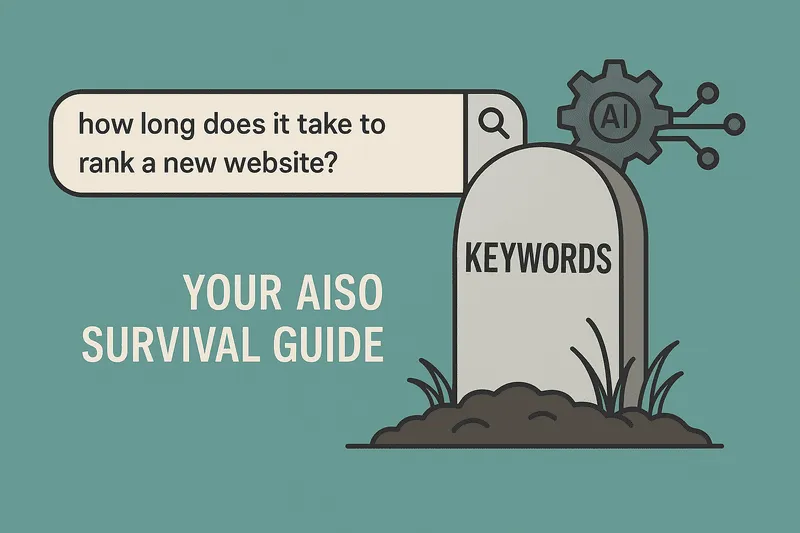
For decades, the foundation of search marketing rested on a simple premise: fight fiercely for short, punchy keywords. "CRM software." "Billing solution." "Email marketing tool." We optimized ruthlessly for these compressed queries because we knew a user would click through and perform the rest of their research on our site. We controlled the narrative. We owned the conversation.
That era is dead. The weapon that killed it? Conversational AI.
New data reveals a profound shift in user behavior that demands immediate action from marketing leaders. As I've documented extensively in my other article on the twin engines of digital visibility, the emergence of AI-powered search has fundamentally changed how users approach discovery. Users are no longer clicking their way through the traditional funnel. They're arriving pre-educated, pre-qualified, and pre-decided—all within the confines of a chat interface.
The Nectiv Study: 5.48 Words That Changed Everything
The new Nectiv study confirms a major paradigm shift in how people are searching through large language models like ChatGPT. According to their analysis of over 8,500 queries, ChatGPT performs external searches in 31% of prompts, averaging 2.17 searches per prompt, with each search query averaging 5.48 words—about 61% longer than a typical Google search of 3.4 words.
This isn't vanity. This isn't a quirk of the dataset. This is a behavioral signal that rewrites everything we know about search marketing.
When users interact with AI, they're no longer typing like they're using Google circa 2010. They're explaining themselves. They're providing context. They're giving AI the specificity it needs to synthesize information and provide meaningful answers. Over 77% of ChatGPT searches contain five or more words, reflecting a move from "keyword targeting" to "context targeting."
This dramatic lengthening isn't a minor shift. It's the canary in the coal mine. Users are approaching AI tools like power users, explaining their clear requirements with unprecedented specificity. They know AI can handle complexity. They're taking advantage of it.
Why Query Length is a Commercial Signal
The surge in query length isn't random noise. It's a direct reflection of how AI systems operate. Unlike traditional search engines designed to rank pages, AI systems are "master compressors"—sophisticated models trained to synthesize information from multiple sources, perform retrieval-augmented generation (RAG), and provide direct answers without requiring users to click and investigate further.
When a user types a long, specific prompt, they're activating AI's complex RAG process, forcing it to perform multiple background searches to ground the information it's seeking. This deeper intent matters because it changes everything about how content gets discovered and cited.
The Three Dimensions of AI Search Behavior
1. AI Searches Are High-Intent
ChatGPT relies on longer, more specific, and more commercial-style queries than the average Google searcher. According to the Nectiv study, search activity is particularly aggressive for prompts with "Local" intent (59% of instances) and general "Commerce" (41%). These aren't casual browsing queries. These are decision-making queries from users ready to evaluate solutions.
2. AI Requires Contextual Depth
Unlike traditional keyword searches optimized around brevity, ChatGPT queries are longer, contextual, and intent-driven. Users are now speaking to AI models as if briefing an assistant: explaining their goals, use cases, and context in full sentences or descriptive phrases.
This mirrors insights shared in The Ultimate AISO Playbook for B2B SaaS, where optimizing for AI-driven discovery means structuring narratives around intent and user scenarios rather than keyword density. Traditional SEO once rewarded the shortest path to an answer; now, AI Search Optimization (AISO) rewards clarity, specificity, and usefulness within a conversation context.
In technical, mature markets like usage-based billing software, visitors rarely search "what is usage-based billing?" Instead, they ask questions like: "Which billing software handles tiered pricing, multi-currency, and real-time metering for high transaction volumes?"
When we worked to simplify messaging across certain product verticals, we noticed something counterintuitive: rankings declined. Why? Because we removed the contextual specificity that AI models rely on for accurate citation and recommendation. AI doesn't want the 30,000-foot overview. It wants the precise, nuanced answer that matches the user's actual problem.
3. AI Actively Seeks Purchase Signals Through Multiple Queries (Fan-Outs)
The Nectiv study reveals that ChatGPT performs multiple queries—up to four per prompt—to triangulate the best data. This "fan-out" behavior reveals specific types of terms that dominated ChatGPT's background searches: "Reviews" (702 instances), "2025" (freshness signals), "Features," and "Comparison". This is a clear directive. AI is actively performing comparative research. It's validating choices. It's looking for third-party evidence to strengthen its recommendations.
As detailed in my guide "Managing Both SEO and AISO," crafting modular pages that satisfy diverse fan-out intents—comparison, feature analysis, pricing, and customer testimonials—can heighten inclusion in AI-generated responses. Multi-angle content now matters more than single-focus keyword pages.
The AISO Mandate: You're Playing for Citations, Not Rankings
Here's the truth that most marketing teams haven't internalized yet: since AI performs initial research entirely within its interface, your content's goal is fundamentally different now. Your content is no longer fighting for position one on Google's search results page. Your content is now fighting to become the authoritative source that the AI trusts and cites.
The mechanism is different. The metrics are different. The entire game has shifted.
The good news? I've documented the winners in my in-depth guide on how to optimize for AI search and boost website conversions by 4.4x. AI search visitors convert at 4.4 times the rate of traditional organic search visitors because they arrive pre-qualified and closer to the purchase decision. They've already done their research. They've already seen the comparisons. They're visiting because an AI system recommended you specifically.
To capture this high-intent, conversational traffic, B2B marketers must focus on two foundational pillars: Structure for easy extraction and Trust for citation.
Pillar 1: Content Structure—Writing for AI Extraction
AI systems need to extract, summarize, and quote definitive statements with precision. This means your content architecture must be intentional and AI-friendly.
Implement Conversational Query Optimization
Stop writing for search engines. Start writing for conversations. Anticipate how people speak to AI using question-style phrasing. Focus on Category Entry Points (CEPs)—the needs and triggers that put buyers into your category—rather than just chasing isolated keywords.
A CEP isn't "project management software." A CEP is "How do I coordinate work across a remote team without creating email chaos?" That question opens a conversation. It signals category intent. AI recognizes it as a buying signal.
Prioritize FAQ and How-To Formats
Comprehensive FAQ sections are ridiculously important for AI visibility. They have the highest impact because they provide clear, citable answers. Similarly, content structured as Q&A pairs is a direct match for AI's response format. When AI encounters your FAQ, it sees pre-packaged answers ready to synthesize into its response.
Why? Because FAQ content is pre-structured for extraction. The format itself tells AI systems: "These are the authoritative answers you should cite."
As detailed in my Complete Guide: How to Optimize for AI Search and Boost Conversions by 4.4x, AI models ground their results in fresh, relevant, semantically linked content that explicitly matches user context. This reinforces why FAQ-structured content performs exceptionally well—it provides the exact semantic match AI systems need.
Structure for Clarity and Comparison
Use structured headings (H1, H2, H3) religiously. This ensures AI systems can understand your content's structure and extract information easily. Content should lead with a clear summary or TL;DR to facilitate fast extraction.
Since AI searches frequently include "Features" and "Comparison," content formats like comparison charts, tables, and detailed how-to guides are highly favored for extraction. Don't bury your comparative analysis in prose. Create explicit comparison matrices. Make it easy for AI to cite your specific comparison.
Marketers also need to adopt continuous content refresh cycles, updating pages with temporal signals like "2025 trends" or "latest reviews." The Nectiv study reinforces this: the term "2025" consistently appears in ChatGPT's fan-out queries, revealing AI's preference for timeliness and freshness when retrieving results. This echoes proven strategies from "Mastering AI Visibility: A Marketing Leader's Guide to SaaS Success in the AI Era," ensuring brand discoverability as AI models increasingly weigh "most current" over "most linked" content.
Pillar 2: Trust Signals—Building Verifiable Authority
AI models are trained to adhere to principles like safety and accuracy. This means they emphasize credible, verifiable sources above nearly everything else. In this environment, E-E-A-T (Experience, Expertise, Authoritativeness, Trustworthiness) becomes the universal currency of AI visibility.
This isn't just about having credentials. It's about demonstrating them throughout your content ecosystem.
Aggressive Review Prioritization
Given AI's preference for review and comparison content, reviews have a "stupid amount of control over your AI SEO rankings." They're more important than ever before.
Consistently gather reviews on platforms like G2, Capterra, and Trustpilot. Highlight them visibly on your website. AI systems are actively searching for review content. When they find detailed, specific reviews from real users, they weight those testimonials heavily in their synthesis process.
Showcase Real-World Results and Human Expertise
AI highly values content sharing real-world results and practical application. As I've documented in "Infusing Human Touch in a Sea of AI-Generated Noise," differentiation in AI search lies in authentic human perspectives. AI content often feels hollow precisely because it lacks the experience of a subject matter expert.
The Nectiv dataset confirms this: "reviews" were the most common modifier in ChatGPT searches, appearing over 700 times. This highlights the rising importance of integrating real customer experiences, case studies, and expert viewpoints. AI tools favor sources that read like human guidance—not static marketing copy.
Showcase customer success stories. Frame case studies around the CEPs that prompted the buying decision in the first place. Include expert-driven content with detailed author bios and credentials. When AI encounters a piece of content with a clear author bio—job title, years of experience, relevant background—it treats that content as more authoritative.
Omnipresence Through Third-Party Evidence
AI doesn't only synthesize information from your website. It synthesizes from a multitude of sources. Your brand needs visibility across industry blogs, niche forums, mainstream media, and user-generated content sites like Reddit, Quora, and YouTube—which appear as universal authorities cited across nearly all sectors.
This means your PR strategy is now part of your AISO strategy. PR that builds credible third-party evidence is essential. When AI sees your brand mentioned across independent sources, it treats you as a category authority.
Technical Trust Through Schema Markup
Implement comprehensive schema markup (like FAQPage, HowTo, and SoftwareApplication) to act as the "AI Translation Layer." Schema signals content type and authority clearly to AI systems. It tells AI: "This is a FAQ with verified answers." "This is a how-to guide with step-by-step instructions." "This is a software product with specific features and pricing."
Schema markup removes ambiguity. It gives AI permission to extract and cite your content with confidence.
The Content Ecosystem: From Isolated Pages to Authority Clusters
The mistake many companies make is approaching AISO as a page-level problem. It's not. It's an ecosystem problem.
Rather than optimizing individual pages, build comprehensive content ecosystems around core Category Entry Points. Start with a pillar page—a comprehensive resource that covers the entire topic from multiple angles. Then create supporting cluster pages that address specific sub-questions and use cases.
Why? Because AI systems reward topical authority. When AI encounters your pillar page surrounded by a constellation of supporting cluster content, all interconnected with contextual internal linking, it signals expertise. It signals you've thought deeply about this category.
This approach also increases your citation opportunities. Instead of a single page being cited by AI, you now have 10-15 pages competing for citations. The aggregate visibility multiplies.
The Nectiv Data: What AI Is Actually Searching For
Let me break down the Nectiv findings more granularly, because the nuance here matters:
Search behavior is commercial. 59% of ChatGPT's background searches include local intent signals. 41% include commerce signals. This tells us users aren't just researching for curiosity. They're researching to buy.
Freshness is a filter. The prevalence of "2025" in background searches signals that AI is actively filtering for recent information. Stale content gets deprioritized. This means content maintenance isn't optional—it's essential.
Reviews are the tiebreaker. With 702 instances of "reviews" in background searches, AI is using customer sentiment as a primary decision factor. Your review strategy directly impacts your AISO visibility.
Features require context. When AI searches for "features," it's not looking for generic feature lists. It's looking for features explained within the context of specific use cases and problems.
Your Move: The Three-Step AISO Reset
The fact that ChatGPT's internal search queries are long, conversational, and highly commercial is the clearest signal yet that the shift to Generative Engine Optimization is complete. The question isn't whether to adapt. It's how fast you can adapt.
Step 1: Audit Your Content Against the 5.48-Word Standard
Review your highest-value pages. Does your content directly answer long, complex questions? Or are you still optimizing for short-tail keywords and generic messaging?
Ask yourself: Would an AI system cite this as authoritative? Would it feel comfortable extracting specific quotes from this content and presenting them to a user?
Step 2: Integrate FAQ Sections and Conversational Headers Immediately
This isn't a future initiative. This is a now initiative. FAQ sections and question-based headers should appear on your high-value pages immediately. These aren't nice-to-haves. They're essential infrastructure for AISO.
Step 3: Bolster E-E-A-T Across Your Entire Content Ecosystem
Showcase customer results with specific metrics. Include original data from your own research. Make author credentials crystal clear. When AI encounters your content, it should immediately recognize the expertise behind it.
The Closing Truth
The high conversion rate of AI traffic proves that qualified prospects are ready to buy once they trust the AI's recommendation. The winners in this new era won't be the companies still fighting for generic keywords. They'll be the companies who've become the genuinely authoritative source in their category.
Short-tail keywords didn't die because Google changed its algorithm. They died because users fundamentally changed how they search. Users realized that AI can handle complexity. Users realized that specific, contextual questions get better answers than generic queries.
Your job now is to speak that language fluently. Create the definitive, most trustworthy answer for every conversational query related to your product. Stop chasing old rankings. Start becoming the star of the conversation.
The era of the 5.48-word query has arrived. The era of one-word keywords is over.
What will you do differently tomorrow?
TL;DR: The Essential AISO Reset
The Core Shift
- ChatGPT queries average 5.48 words (61% longer than Google's 3.4-word average)
- 77% of ChatGPT queries are 5+ words, signaling a move from "keyword targeting" to "context targeting"
- ChatGPT performs external searches in 31% of prompts, averaging 2.17 searches per prompt
- AI search visitors convert at 4.4x the rate of traditional organic search
What This Means
- Short-tail keywords are dead; contextual, conversational queries are everything
- Your content must answer long, specific, commercial-intent questions
- AI prioritizes reviews (702 instances), freshness ("2025"), features, and comparisons
- Multi-angle content (FAQs, comparisons, features, testimonials) outperforms single-focus pages
Your Immediate Action Items
- Audit Content Against the 5.48-Word Standard: Does your content directly answer long, complex questions? Can AI extract specific, citable insights?
- Implement FAQ Sections & Conversational Headers: Question-based headers and comprehensive FAQs are essential for AI extraction and citation.
- Build Multi-Angle Content Ecosystems: Create comparison matrices, feature guides, pricing breakdowns, and customer stories. Fan-out queries demand modular content.
- Refresh Content for Freshness: Add temporal signals ("2025," "latest," "current") to maintain AI visibility as models prioritize recency.
- Amplify E-E-A-T Signals: Showcase author credentials, real customer results, case studies, and third-party reviews. AI trusts sources that read like human guidance.
- Prioritize Reviews & Human Authenticity: The most common modifier in ChatGPT searches was "reviews." Integrate real customer experiences and expert viewpoints throughout your content.
- Build Content Hubs Around Category Entry Points (CEPs): Connect pillar pages with topic clusters addressing specific use cases and buyer intents.
Success Metrics to Track
- AI citation rate for your content
- Share of voice in AI-generated responses
- Conversion rate from AI-sourced traffic (not just volume)
- Presence in AI overview appearances and snippets
- Customer sentiment and review frequency
Timeline
- Weeks 1-2: Content audit and FAQ implementation
- Weeks 3-4: Build first comparison resource and feature guide
- Months 2-3: Scale to additional topic clusters and amplify E-E-A-T signals
- Months 3+: Continuous optimization based on AI citation tracking
Frequently Asked Questions (FAQs)
Q: Why is query length so important? Can't I still optimize for short keywords?
A: Short-tail keywords are rapidly losing relevance because AI users aren't searching like Google users anymore. They're having conversations. They're explaining their needs contextually. ChatGPT's 5.48-word average (versus Google's 3.4) reflects this fundamental shift. AI systems are designed to synthesize context, not just match keywords. Trying to rank for "CRM software" is now like optimizing for a query that nobody actually types anymore.
Q: What if my industry doesn't seem commercial?
A: The Nectiv study shows that even seemingly non-commercial verticals have significant commercial intent signals. Local searches (59% of instances) and commerce queries (41%) dominate. Additionally, "reviews," "features," and "comparison" modifiers appear across all industries studied—Beauty, Credit Cards, Fashion, Jobs, Software, and Real Estate. Nearly every category has buying intent. Position your content accordingly.
Q: How long does it take to see results from AISO?
A: Initial improvements can appear within 4-6 weeks (FAQ sections, schema markup, content restructuring). However, significant citation improvements and traffic lift typically take 3-6 months as AI models need time to index, synthesize, and begin citing your optimized content. The key is starting now—every week without AISO optimization is traffic you're leaving on the table.
Q: Should I abandon traditional SEO?
A: No. Traditional SEO and AISO complement each other. Many technical SEO fundamentals (site speed, mobile optimization, structured data) benefit both traditional search and AI visibility. The key difference is your content strategy: instead of optimizing pages for keyword rankings, you're now structuring them for AI extraction, citation, and conversation context. The technical foundation remains similar; the narrative approach fundamentally changes.
Q: What's the biggest mistake companies make with AISO?
A: Over-simplifying content in the name of "clarity." Many teams strip away contextual specificity thinking it will help. In reality, AI systems need depth, nuance, and specific context to cite you accurately. The mistake isn't making content too long or too detailed—it's making it too generic. Write for the specific use case, not the broad category.
Q: How do I measure AI traffic vs. traditional organic traffic?
A: Set up referral tracking in Google Analytics 4 for sources like openai.com, bing.com/chat, and perplexity.ai. Use UTM parameters for social media AI tools. Implement specialized AI monitoring tools for comprehensive tracking. Most importantly, focus on conversion-weighted metrics rather than just traffic volume—AI traffic quality matters infinitely more than quantity given the 4.4x conversion rate advantage.
Q: Do I need to create entirely new content or can I repurpose existing pages?
A: Start by repurposing. Add FAQ sections to high-value pages. Restructure content with question-based headers. Build comparison tables alongside existing feature explanations. Then create new, AI-specific content like multi-angle guides, topical clusters, and deep-dive case studies. The 80/20 rule applies: 80% of improvements come from 20% new effort on existing content.
Q: How important are reviews and third-party mentions for AISO?
A: Extremely important. The Nectiv study showed "reviews" as the single most common modifier (702 instances) in ChatGPT's background searches. AI actively searches for third-party validation. You need presence on G2, Capterra, Trustpilot, Reddit, Quora, and YouTube. Your PR strategy is now part of your AISO strategy. Third-party mentions and reviews directly impact your citation likelihood.
Q: Should I be optimizing for specific AI platforms (ChatGPT vs. Google AI vs. Perplexity)?
A: Focus on fundamental principles that work across all platforms first (structured content, E-E-A-T, freshness, reviews). Each platform has slightly different preferences, but the underlying principles—clarity, authority, specificity, context—apply universally. Once you've nailed the fundamentals, you can then fine-tune for specific platform behaviors.
Q: What's the relationship between Category Entry Points (CEPs) and the 5.48-word query length?
A: CEPs are the trigger points that put users into buying mode. They're usually phrased as questions or specific use cases. The 5.48-word average query reflects users describing their CEP contextually. Instead of searching "billing software," they search "which billing software handles tiered pricing and multi-currency?" That longer query is the user articulating their CEP. Your content must address CEPs explicitly, not just product features generically.
Q: How does the "fan-out" behavior change my content strategy?
A: Since ChatGPT performs up to 4 queries per prompt, you need multi-angle content that satisfies diverse intents. A single page explaining features isn't enough. Create modular content addressing reviews, comparisons, features, pricing, and implementation. When AI fan-outs across multiple searches, having answers to each query increases your inclusion in the final AI response.
Q: Is E-E-A-T still important if I have great content?
A: Yes, absolutely. E-E-A-T has become the "universal AI currency." Great content without credible authorship, expertise signals, and trustworthiness cues will be deprioritized. AI systems are designed to emphasize credible, verifiable sources. Add detailed author bios, credentials, customer success metrics, and third-party validation. E-E-A-T isn't optional—it's foundational to AI visibility.
Q: Where do I start if I have limited resources?
A: Prioritize in this order:
- Add FAQ sections to top 5 pages
- Implement schema markup
- Refresh content with freshness signals ("2025," current data)
- Add author credentials and expertise signals
- Create one comparison resource
Each of these can be completed in weeks, not months, and will generate measurable AI visibility improvements.
Get the monthly briefing
One high-signal edition a month on B2B growth, AI search, and agentic marketing. No noise, unsubscribe anytime.